
Cloud Cube Model

What is Cloud Cube Model?

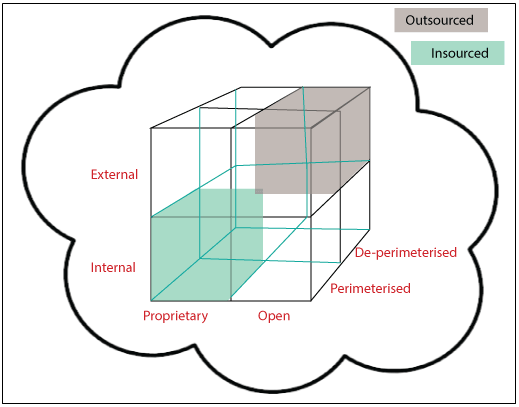
The Cloud computing model is developed by the Jericho forum. It helps to classify the network of cloud-based on the four-dimensional factor: Internal/External, proprietary/open, de-perimeterized/ perimeterized, and insourced/ outsourced.

Now, let’s discuss the cloud cube model.

Introduction to Cloud Cube

The Cloud cube model helps to categorize the network of cloud-based on the four-dimensional factor. The main motive of the cloud model is to secure and protect the cloud network. The cloud model supports to choose cloud creation for the security association. It also helps IT managers, organizations, and business leaders by offering a safe and protected network.

Security is an essential aspect for cloud users, and most of the cloud providers understand it. The customer should also take care of that; the selected cloud formation fulfills the regulatory and location needs. They also need one thing in their mind that if cloud providers stop offering the services, where else they can move.

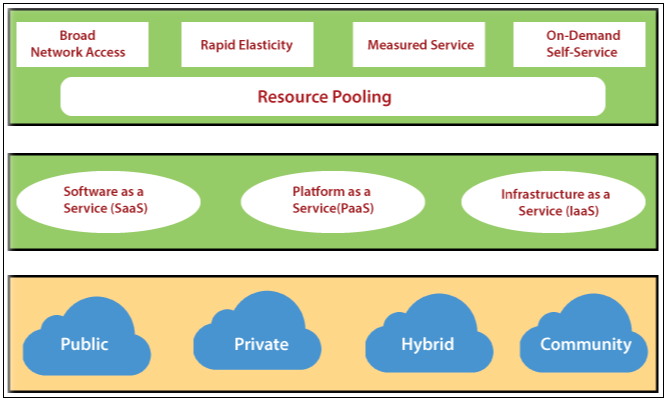
There are three service models which consists of:

  • SaaS
  • PaaS
  • IaaS

There are four deployment models also.

  • Public cloud
  • Private cloud
  • Community cloud
  • Hybrid cloud

The models are flexible, user-friendly, and offer many benefits to cloud users.

The following figure shows the cloud layers when the clouds operates.
cloud layers

How is Data Secured in the Cloud Cube Model?

There are various steps and points you should keep in your mind while securing your data in a cloud cube model.

  1. The categorization of the data, the user must know what rules must be applied to secure and protect it.
  2. It should make sure that the data exist only in particular trust levels.
  3. It should examine that what regulatory compliance and constraints are applicable. For example: - The data is kept in a specific limit and whether it has to stay in the secure harbor or not.

  When the data is categorized and can put in the needed zone, the assigned person is in a position to decide the following aspects-

  • The processes and data, which are to be shift in the cloud.
  • At what level the customer wants to operate in the cloud. Maybe it is infrastructure, platform, and software.
  • The cloud formations fulfill the requirements.
  • In a cloud, the level of operation can be different as per the requirement.

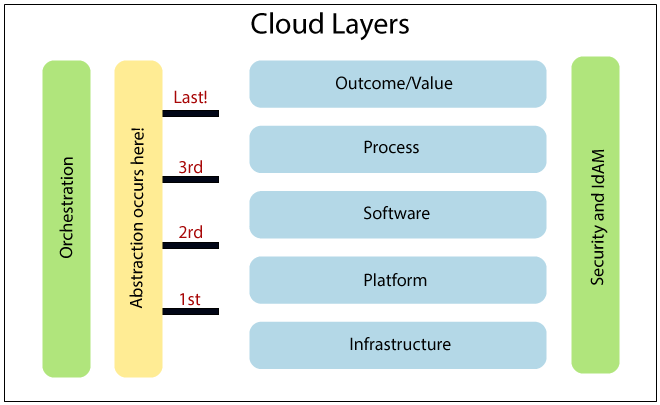
The following figure shows the cloud layers, where the cloud operates:
Cloud Cube Model

Dimensions of Cloud Cube Model 

There are following four dimensions in the Cloud cube model.

  • Internal/External
  • Proprietary/open
  • De-perimeterized/perimeterized
  • Insourced/outsourced dimension

Internal/External: - Internal/External is the most common form of the cloud. It describes the physical location of the data. It agrees whether the data exists inside or outside of your organization’s limit. In this, the data that is stored by the help of private cloud deployment will be referred to as internal, and the data outside the cloud will be referred to as external.

Proprietary/Open: - The second dimension of cloud formation is proprietary/open. It defines the state of ownership of the cloud technology and interfaces. It also defines the level of incomparability while enabling data transportability between the system and forms of cloud.

The meaning of proprietary dimension means that the organization is offering the service in a secure and protected manner under their ownership.

The open dimension using such type of technology in which more suppliers are allowed. In addition to that, the user is not constrained in being able to share the data and cooperate with selected partners using open technology.

De-perimeterized/Perimeterized: - To reach de-perimeterized/perimeterized form, the user requires Jericho forum and collaboration oriented architecture commandments. It defines whether you are working inside your traditional mindset or outside it.

 The meaning Perimeterized dimension is continuing to work within the traditional boundary, orphan signaled by network firewalls. With the support of VPN and the operation of the virtual server in your IP domain, the customer can expand the organization’s boundary into the external cloud computing domain.

De-perimeterized is the system which is designed on the principles outlined in the Jericho forum’s commandments. In this, data is encapsulated with metadata and structure, which will again support to secure the data and control the inappropriate usage.

Insourced/Outsourced: - Insourced/outsourced is the fourth dimension of the cloud cube model. In the outsourced dimension, services are offered by the third party, and in the insourced dimension, the services are offered by the own staff.

In some organizations with traditional bandwidth software or hardware, providers will run smoothly when they become cloud service providers.

Organizations exploring to process cloud services should have the capability to set a legally binding collaboration agreement. In this, an organization must ensure that the data is removed from the service provider’s infrastructure.

Related Topics

Cloud Cube Model

What is Cloud Cube Model? The Cloud computing model is developed by the Jericho forum. It helps to classify the network of cloud-based on the four-dimensional factor: Internal/External, proprietary/open, de-perimeterized/...

4 minutes read.

Storage Virtualization

Storage virtualization is the merging of physical storage from multiple storage devices so that it appears like a single storage device. This procedure consists of abstracting and covering the internal functions of a storage...

2 minutes read.

Introduction to Ms Azure

Cloud Computing The phrase "cloud computing" refers to the storage and retrieval of data over the internet. You get data from a remote server when you use cloud computing. It does...

7 minutes read.

Cloud Computing Storage

Cloud Storage is a service that permits to store data on the offsite storage system, and it is managed by third-party and is made accessible by a web service API. Storage Devices Storage devices are of...

2 minutes read.

Hardware and Software virtualization

Hardware Virtualization Hardware virtualization is a type of virtualization; it is the abstraction of computing resources from the software that uses cloud resources. In this embedding virtual machine software into the servers hardware component....

3 minutes read.

Grid Computing vs Cloud Computing

What is Grid Computing? Grid computing is a distributed structure of a large number of computers connected to solve a complicated problem. In grid computing, servers and computers run independently and are loosely...

4 minutes read.

Types of Cloud

PublicPrivateHybirdCommunity Pubic cloud:-The-Public cloud permits the accessibility of systems and services efficiently to the general public. A public cloud is the one in which the services and infrastructure provides offsite over...

3 minutes read.

Network as a service

Network as a Service (NaaS) Network as a service (NaaS) offers networking infrastructure to the user who doesn’t want to build their application. In this, the third party provides the network infrastructure. NaaS consists...

2 minutes read.

Cloud Service Models

There are various types of cloud service model Software as a service (SaaS)Infrastructure as a service (IaaS)Platform as a service (PaaS)Identity as a service (IDaaS)Network as a service (NaaS) Let’s discuss each service model in detail. Software-as-a-service (SaaS):- SaaS is...

2 minutes read.

Why Cloud Computing is Important in Data Science?

Introduction Data science & cloud computing, as you seem to be aware, are at the forefront of how contemporary firms function. Data science gives businesses the facts they need to customise...

7 minutes read.

Microsoft Azure Vocabulary

Cloud is a symbol, metaphor, and abstraction between your business and local computing infrastructure. While, there is globally distributed data centers, which will be owned by the firm and provided...

3 minutes read.

Operating System Virtualization

The Virtualization of the operating system is the use of code to allow computer hardware to run multiple instances of different operating systems. Concurrently permits you to run various applications requiring...

2 minutes read.

Software as a Service SaaS Model

What is Software as a Service (SaaS) Model? Software as a Service (SaaS) is defined as a software delivery model where the application is hosted by the third-party provider and makes...

7 minutes read.

Server Virtualization

Server virtualization means partitioning of a physical server into various virtual servers. It is used to expand the server resources. In the server virtualization, the resources of the server are hidden from the...

2 minutes read.

Cloud Computing Management

Cloud providers are responsible for managing resources and their quality. Management of resources consists of several aspects of cloud computing such as load balancing performance, backups, deployment, capacity, etc. the management is vital to...

3 minutes read.

Cloud Computing Technologies

Cloud Computing Technologies  Technologies used in cloud computing are: Grid ComputingService-Oriented Architecture (SOA)VirtualizationUtility Computing Grid Computing: - Grid computing is a distributed structure of large number of computers connected to solve a complicated problem. In grid computing, servers...

6 minutes read.

Cloud Computing Tutorial

Our tutorial provides you the basic and advanced concepts of cloud computing in detail. Our cloud computing tutorial is mainly designed for beginners and profession What is Cloud Computing? Cloud computing is a general...

3 minutes read.

Mobile Cloud Computing

Mobile Cloud Computing is a system where you can use your mobile phone to access the cloud remotely. Both mobile phones and internet connections are required.  In mobile cloud computing, the customer...

3 minutes read.

Cloud Deployment Models

Cloud Deployment Model Because it's a virtual computing environment, there are various ways to deploy it, depending on the amount of data you want to store and who has access. Various Types...

7 minutes read.

Cloud Computing Providers

A cloud provider is a company that provides the resources of cloud computing, such as infrastructure as a service (IaaS), platform as a service (PaaS), and software as a service (SaaS) to other...

4 minutes read.