
Cloud Computing Tutorial

Our tutorial provides you the basic and advanced concepts of cloud computing in detail.

Our cloud computing tutorial is mainly designed for beginners and profession

What is Cloud Computing?

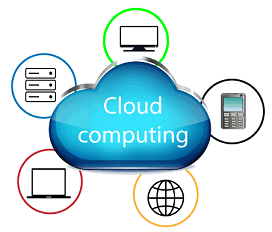
Cloud computing is a general term that is used to describe a new class of network-based computing that takes place over the internet. Example: AWS, Azure, Google cloud.

Cloud computing is the on-demand facility of computer Systems resources, especially data storage, and computing power, without any direct actively management by the user.
Cloud Computing Tutorial

In other words, cloud computing is defined as the on-demand facility of computer power, database storage, applications, and other IT resources through the internet. It provides a solution for IT infrastructure at a low price.

Why Cloud Computing?

For providing the small, as well as extensive IT infrastructure, IT companies follow the traditional method. That means for any type of IT Company we need a server room that is the basic need of any IT companies.

In that server room, we need so many things like a mail server, database server, networking, firewalls, routers, switches, modems, QPS (query per second), configuration system, high need speed, and the maintenance engineers.

To establish such type of IT infrastructure, we need lots of money and resources. So, to overcome all these problems and to reduced the IT infrastructure cost, the concept of cloud computing comes into existence.

Why named Cloud?

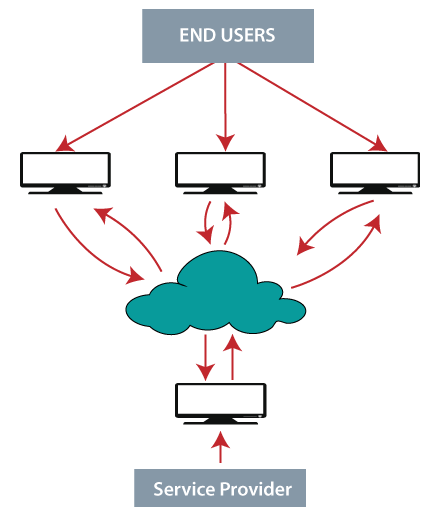
The reason behind the term “cloud” came from the design of a network that was used by the network engineers to express or represent the location of different network devices and their inter-connection. The structure of this network design was similar to a cloud.
Cloud Computing Tutorial 1

Features of Cloud Computing

The features of cloud computing are:

  1. On-demand self-services:-Cloud computing permits users to use web services and resources as on-demand. Any-one can login to a website at any time and use it.
  2. Broad network access:-Cloud computing is web-based, and it can be accessed from anywhere at any time.
  3. Resource pooling:-In cloud computing, resource pooling means allowing multiple customers to share a pool of resources.
  4. Rapid Elasticity:-In cloud computing, scaling of the resources is very easy, no matter whether it is horizontal or vertical. Scaling of resources means the capacity of resource to deal with increasing or decreasing demand.
  5. Multi-sharing:-In cloud computing, multi-users and applications can work more in a well defined and competent way within less cost by sharing a common infrastructure.
  6. Maintenance:-Maintenance of cloud computing application is simple because of no need of installation on each user’s computer, and it can be accessed from various places.

Architecture of Cloud Computing

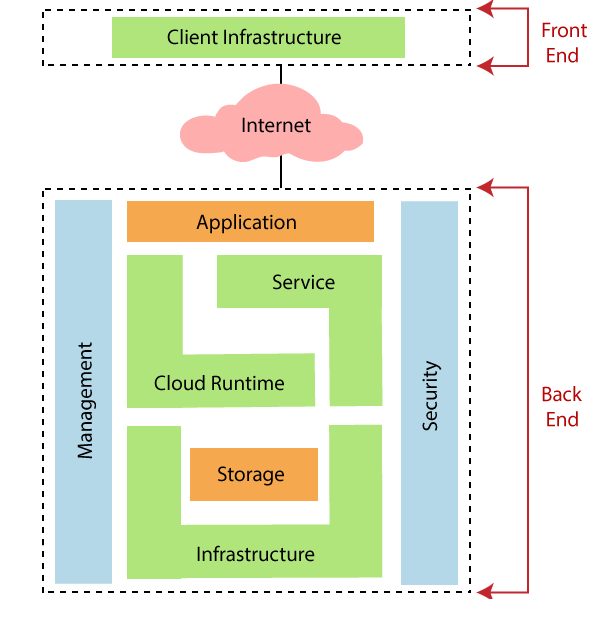
The architecture of cloud computing is broadly divided into two parts.

  1. Front end
  2. Back end

Both ends are connected via a network, normally an Internet connection. The diagram below illustrates the cloud computing architecture's visual view:
Cloud Computing Tutorial 2

Let’s discuss both parts of cloud computing architecture in detail.

  1. Front end:-Front end is the view that is visible to the client or a user.  It is the client part of the cloud computing system. Front-end contains the user interfaces, applications, and networks that are used for accessing the cloud system. Example: a web browser.
  2. Back end:-The back end is the cloud itself. It contains all the resources that are required to provide a cloud computing service. This end is composed of huge data storage, virtual machines, security mechanism, services, development model, etc.

Cloud Computing Tutorial

Cloud Service Models

Virtualization

Cloud Computing Advanced Concept


Related Topics

Cloud Computing Security

Security in cloud computing is the main issue. Data should be kept in an encrypted form in the cloud. Proxy and brokerage tools should be used to limit client access to shared data directly. Security...

2 minutes read.

Storage Virtualization

Storage virtualization is the merging of physical storage from multiple storage devices so that it appears like a single storage device. This procedure consists of abstracting and covering the internal functions of a storage...

2 minutes read.

Cloud Computing Strategy

Strategic Planning Before investing the money for cloud computing and developing cloud applications, the user must necessarily consider the needs, strategically plan them for business needs. Users must consider the following issues. Budget requirementPrivacy and data securityNeed...

3 minutes read.

Advantages and Disadvantages of Cloud Computing

Advantages of Cloud Computing Low cost: - The most significant advantage of cloud computing is the low cost. In cloud computing to run cloud technology, there is no requirement of high power computers and technology...

2 minutes read.

Federated Cloud

What is Federated Cloud? In this modern era, we are using cloud storage widely for the storage of data. There are many different types of clouds. Many organizations provide the cloud...

3 minutes read.

Hardware and Software virtualization

Hardware Virtualization Hardware virtualization is a type of virtualization; it is the abstraction of computing resources from the software that uses cloud resources. In this embedding virtual machine software into the servers hardware component....

3 minutes read.

Types of Cloud

PublicPrivateHybirdCommunity Pubic cloud:-The-Public cloud permits the accessibility of systems and services efficiently to the general public. A public cloud is the one in which the services and infrastructure provides offsite over...

3 minutes read.

Operating System Virtualization

The Virtualization of the operating system is the use of code to allow computer hardware to run multiple instances of different operating systems. Concurrently permits you to run various applications requiring...

2 minutes read.

Cloud Computing Tutorial

Our tutorial provides you the basic and advanced concepts of cloud computing in detail. Our cloud computing tutorial is mainly designed for beginners and profession What is Cloud Computing? Cloud computing is a general...

3 minutes read.

Future of Cloud Computing

Future of Cloud Computing Cloud computing and cloud storage platforms have been discussed a lot in recent years, such as Amazon Web Service and google cloud. Various newcomers are also added in this space,...

3 minutes read.

Platform as a Service

Platform as a Service (PaaS) Platform as a service (PaaS) is a programming platform for developer which is created for the programmer to develop, test, run and manage the applications. In PaaS...

2 minutes read.

Cloud Computing Storage

Cloud Storage is a service that permits to store data on the offsite storage system, and it is managed by third-party and is made accessible by a web service API. Storage Devices Storage devices are of...

2 minutes read.

Microsoft Azure Vocabulary

Cloud is a symbol, metaphor, and abstraction between your business and local computing infrastructure. While, there is globally distributed data centers, which will be owned by the firm and provided...

3 minutes read.

Infrastructure as a Service

Infrastructure as a Service (IaaS) Infrastructure as a Service (IaaS) provides the facility of essential resources like physical machines, virtual machines, virtual storage, etc. Infrastructure as a service (IaaS) is a form of cloud computing...

1 minute read.

Cloud Deployment Models

Cloud Deployment Model Because it's a virtual computing environment, there are various ways to deploy it, depending on the amount of data you want to store and who has access. Various Types...

7 minutes read.

What is Virtualization?

Virtualization in Cloud Computing Virtualization is a technique, which permits to share single physical instance of an application or resources among various organizations. Virtualization is the designing of a virtual variant of something,...

2 minutes read.

Identity as a Service

Identity as a Service (IDaaS) Identity as a service provides management of employee, client, or user’s identification-related information as a digital entity. It reduces the problem of remembering every different username and password combination...

2 minutes read.

Server Virtualization

Server virtualization means partitioning of a physical server into various virtual servers. It is used to expand the server resources. In the server virtualization, the resources of the server are hidden from the...

2 minutes read.

Azure Consumption Pricing Model

This part of Azure we will learn, needs some pre-requisite of CapEx vs OpEx. Consumption based pricing model: You're just charged for what you use, no more, no less.  Microsoft has provided various...

3 minutes read.

Grid Computing vs Cloud Computing

What is Grid Computing? Grid computing is a distributed structure of a large number of computers connected to solve a complicated problem. In grid computing, servers and computers run independently and are loosely...

4 minutes read.