
What is Anemia
The condition of the low level of red blood cells in the body is known as anemia. This low number can be identified by routine check-ups. The low hemoglobin or hematocrit shows the patient is suffering from anemia. Hemoglobin is one of the prime proteins present in the RBCs. It is responsible for carrying oxygen and transport it throughout the body. In the case of anemia, the level of hemoglobin in the blood falls rapidly. A low level of hemoglobin means a low supply of oxygen to the organs. That’s why fatigue and shortness of breath take place during the disease.
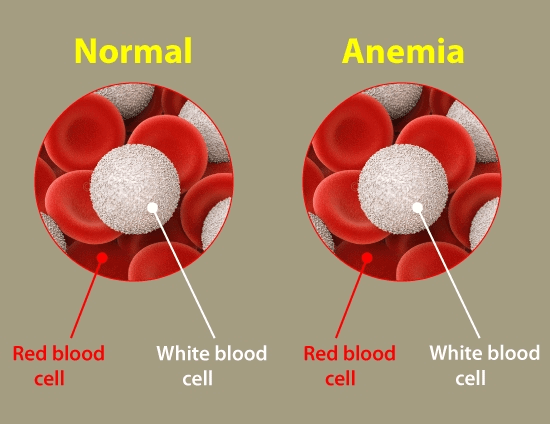
Signs and Symptoms of Anemia
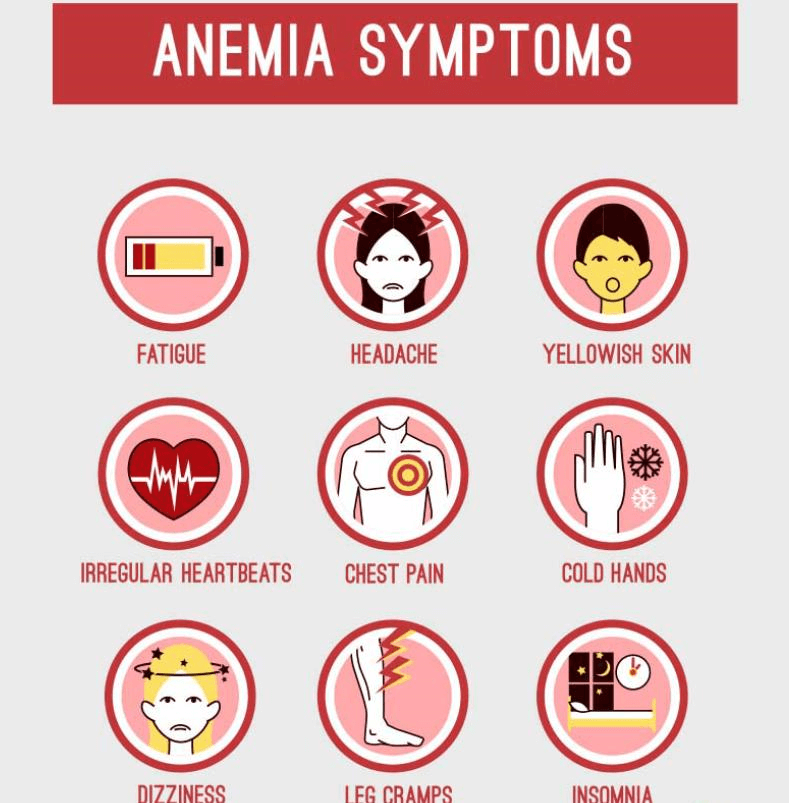
The symptoms of the disease are so mild, and sometimes it’s impossible to notice them. These symptoms start to develop with the decreased blood cells. Among them, the most common symptom is fatigue. Other than this, various symptoms of anemia as per their different causes are as under:
- Headache
- Dizziness and light-headedness
- Fast or unusual heartbeat
- Pain in joints, chest, stomach, and bones
- The problem of growth in children and teens
- Short breath
- Pale skin
- Cold hands and feet
- Weakness
- Constipation
- Brittle nails
- Unusual cravings for eating ice, clay, or dirt, for example.
The following are the certain suggestive symptoms in some particular forms of the disease:
- Aplastic Anemia: Skin rashes, fever, and frequent infections are some of aplastic anemia’s common symptoms.
- Hemolytic Anemia: Jaundice, fever, dark-colored urine, and abdominal pain are its common symptoms.
- Sickle Cell Anemia: Painful swelling in the hands and feet, fatigue, and jaundice are the common symptoms of sickle cell anemia.
- Folic Acid Deficiency Anemia: Irritability, diarrhea, and a smooth, glossy, and often painful tongue are the symptoms that can be seen in the patient of folic acid deficiency anemia.
People at High Risk of the Disease
Anemia is a condition that is related to RBCs. It would develop in anyone, but certain groups are at the higher risk of the disease:
- Women: In women, the condition may occur due to blood loss during the monthly menstrual cycle and childbirth. Women have a higher risk of anemia if they get heavy periods with fibroids.
- Infants: If the infants are not getting enough iron from breast milk or other solid food, then the quantity of iron in their body may be reduced, which may give birth to anemia in them. It should be noted that the infants’ body is not completely able to digest the solid food, so they can’t take up the iron from it so easily.
- Children (In the Age Group of 1 to 2 Years): The problem may also develop in the children who come under the age group of 1 to 2 years. This is because it is the time of growth spurts, so the body wants a larger quantity of iron. But in most cases, the supply of iron is not enough, which gives birth to anemia.
- People over the age of 65: People over the age of 65 are also at a higher risk of being a patient of anemia. It is because senior citizens more likely to have iron-poor diets, and they may also have some chronic diseases.
- People on Blood Thinners: These medications include certain drugs such as aspirin, warfarin, heparin products, dabigatran, rivaroxaban, clopidogrel, and some others.
- People with a Chronic Illness: Those suffering from chronic illnesses like AIDS, kidney disease, heart failure, liver disease, diabetes, etc.
- Others: Those who suffer blood loss during surgery or trauma and those who get an intestinal disorder like Crohn’s disease, a disease that makes the absorption of nutrients difficult.
Precautions
There are certain precautions that can be helpful in reducing the possibility of being affected by anemia:
- Always take a healthy and balanced diet and add food items that are rich in iron to your diet.
- Keep your body hydrated by drinking plenty of water.
- Avoid exposure to chemicals like lead because it may cause lead poisoning.
- The good health of teeth is also an important factor in preventing the body from anemia. It would be best if you also go regularly to the dentists.
- Regular exercise should be done. But if you are weak, then consult with your healthcare provider about the safe way of doing it.
- Regularly wash your hands to prevent infection.
- Always consult with your doctor about any changing symptoms in the body.
- Make a report of your symptoms to have track of them.
Diet Plan
Nutritional deficiencies are one of the prime causes of anemia in people of all age groups. So taking food that is a rich source of iron can be helpful in reducing the risk of the disease. The food items listed below contain a high amount of iron so that you can add them to your diet plan:
- Pulses and beans
- Green vegetables like kale, spinach, and watercress
- Cereals and bread which are fortified with iron
- Brown rice
- Nuts and seeds
- Fish
- Tofu
- Eggs
- White or red meats
- Dried fruits
Types of Anemia
There are more than 400 types of anemia have been discovered in human beings. These types are divided into three categories which are as follows:
Anemia Caused by Blood loss
The loss of RBCs can occur through bleeding. The condition remains unnoticed due to the slow process over a long period. Its causes are:
- Gastrointestinal conditions like ulcers, cancer, hemorrhoids, etc.
- Post-trauma or post-surgery.
- Period of women, especially in case of heavy menstruation with fibroids.
Anemia Caused by Decreased Production of RBCs
In this type of anemia, RBCs’ production gets affected. It can be either reduced or disturbed. It can be happened due to not having enough supply of minerals and vitamins to the RBCs.This type of anemia gives birth to various conditions such as:
- Iron-deficiency Anemia: This condition is generated due to the deficiency of mineral iron in the body. The bone marrow produces hemoglobin present in the blood, which takes oxygen to the organs with the help of iron. The condition can be caused by:
- A diet with a lack of iron, especially in infants, vegetarians, children, and others.
- Consumption of certain drugs, caffeinated drinks, or even food.
- Making a regular donation of blood.
- Stamina training
- A chronic slow bleed from a gastrointestinal source.
- Certain conditions are related to digestion. They can be the removal of a part in the stomach or small intestine or having Crohn’s disease.
- Vitamin-deficiency Anemia: This type of anemia generates due to not having enough supply of vitamin B12 and folate. These two vitamins play an important role in the formation of red blood cells. The condition can be caused by:
- Dietary Deficiency: If someone does not have meat, it may affect the supply of vitamin B12 to the body. And if the vegetables are overcooked or not eaten in enough quantity, it may affect the supply of folate to the body.
- Megaloblastic Anemia: When the supply of vitamin B12 and folate is not sufficient.
- Pernicious Anemia: When losing the ability to absorb the required amount of vitamin B12.
- Others: Some other causes of vitamin deficiency are consumption of alcohol, medications, and intestinal disease like tropical sprue.
- Bone Marrow and Stem Cell Problem: Under this problem, the production of RBCs get reduced. It can happen due to the development of stem cells in the red blood cells. These cells are generally present in the marrow that is in the middle of the bones. The anemia takes place when there is not enough production of stem cells. It can also happen when the stem cells do not properly, or they get replaced by some other cells like cancer cells. The anemia which is generated by the problem of bone marrow or stem cells includes the following types:
- Aplastic Anemia: It happens due to the lack of stem cells in the body. Aplastic anemia can be caused by genetic issues or an injury in the bone marrow because of certain medications, radiation, chemotherapy, or infection. The bone marrow can also be affected by multiple myeloma or leukemia. In some cases, the cause of aplastic anemia remains unidentified.
- Lead Poisoning: Lead is toxic to the bone marrow. It can affect the production of RBCs. Lead poison can take place when a person comes into contact with lead in industries or any other place. The consumption of chips of lead paint can also cause lead poisoning.
- Thalassemia: The disorder is generated with disturbed hemoglobin formation. Under this condition, a small number of RBCs is produced in the body, which can be asymptomatic as well as severe. It is a genetic disorder and can pass from generation to generation. The condition can be mild as well as life-threatening. The most acute form of thalassemia is Cooley’s anemia.
- Sickle Cell Anemia: It is a genetic disorder in which the round-shaped RBCs turn into crescent-shaped, which can get trapped in tiny blood vessels and causes pain. The quick breakdown of RBCs gives birth to this anemia and reduces the supply of oxygen to the organs.
Anemia Caused by Destruction of RBCs
Sometimes, RBCs are fragile, and the stress of traveling through the body becomes unbearable for them. It may burst them and can cause hemolytic anemia. The condition may develop at the time of birth or later also. Most of the causes of the disease remain unclear, but they include the following:
- Some conditions like sickle cell anemia and thrombotic thrombocytopenic purpura (TTP) can transfer through genes.
- An attack caused by the immune system along with lupus. The condition can be developed in a newborn baby or even in a baby in the womb. It is known as a hemolytic disease of the newborn.
- Generation of toxins from a liver or kidney disease.
- The strain on the body due to infections, drugs, the venom of snake or spider, or certain food items.
- The condition of enlarged spleen traps the RBCs and causes premature damage to them.
- Certain conditions like vascular grafts, tumors, severe burns, severe hypertension, clotting disorder, etc., can also cause anemia of RBCs’ destruction.
Types of Headache Caused by Anemia
Headache is one of the most common symptoms of anemia. There are different types of headaches that the patient may suffer. They include the following:
- Basic Headaches: It is a simple type of headache experienced by many patients from time to time. There is not any particular reason or cause for these headaches. The low levels of oxygen in the brain can be a reason for such headaches.
- Migraine Attacks: The pain creates a throbbing sensation on one side of the head. But it may vary in some patients. The patients of the disease may get a regular attack of the pain. Some other problems can also be generated with migraine pain, like a change in vision or sensitivity to light or sound. The condition may remain for a long period and, in some cases, severe also.
- CVT Headaches: CVT is a blood clot that takes place in a vein and is responsible for draining the blood from the brain. This clot blocks the way of blood and sends it back, which results in distension of the vein walls, inflammation, and blood leakage into the brain. And then, this condition develops a headache which is a very common symptom of CVT. More than 90% of patients suffering from CVT also get headaches.
Treatment of These Headaches
The treatment of these headaches can be done by using various treatment methods, which are given below:
- Headaches for IDA: This type of headache can be treated by raising the iron level of the patient with the help of iron pills. The increased iron level in the blood helps the RBCs to carry the required amount of oxygen throughout the body.
- Headaches from Vitamin Deficiencies: By replenishing the low level of vitamins and RBCs and increasing oxygen transport to the brain.
- Migraine Attacks: Migraine attacks can be treated by using the triptans medications. This drug treats migraine attacks by work on brain chemicals such as serotonin.
- Headaches from CVT: CVT can be treated with the help of anticoagulants (blood thinners) to dissolve the blood clot. But this treatment can only be used after stabilizing seizures and other neurological problems. The clot is removed by the surgery.
Anemia Diagnosis
Different types of tests to diagnose anemia are as follows:
- Complete Blood Count (CBC)
- Reticulocyte count is used to checking the immature RBCs.
- A blood smear or differential is helpful in counting the white blood cells (WBCs), verifying the shape of RBCs, and finding the unusual cells.
The count of RBCs, hemoglobin, and hematocrit level (making a comparison between the total volume of RBCs and blood) of the human blood can be measure by using the method of complete blood count (CBC). It is the most common method of diagnosing anemia. It helps the doctor to get a complete report of a person’s health. It also indicates some other conditions like leukemia or kidney disease. If the level of hemoglobin and hematocrit is lower than the normal range; then, the person may have the symptoms of anemia. But CBC always does not show the actual result. It is because sometimes, a healthy person may also get a lower level of hemoglobin and hematocrit. However, the method can be a useful starting point. To conduct the test, the doctor may take some reports or information about the medical history of the person and his/her family along with a physical test. The doctor may also opt for some tests such as:
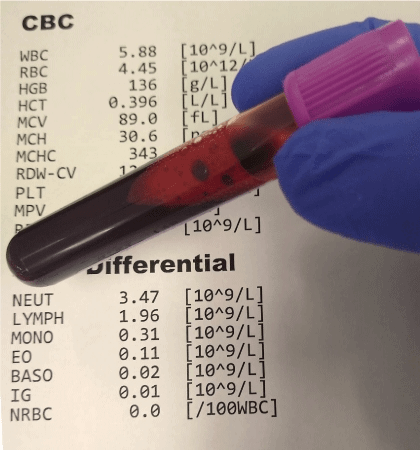
- Serum Iron Levels: This blood test helps in determining whether the iron deficiency is the cause of anemia or not.
- Ferritin Test: With the help of this blood test, iron stores can be analyzed.
- Vitamin B-12 Test: Under this blood test, the level of Vitamin B-12 can be counted in the blood.
- Folic Acid Test: With the help of this blood test, a lower level of serum folate can be found.
- Stool Test for Occult Blood: Under this test, a chemical is applied to the stool specimen to find out whether blood is present in it or not. If the result is positive, it implies the blood is present and is being lost in the gastrointestinal tract from the mouth to the rectum. This leakage of blood through stool may cause poisoning stomach ulcers, colon cancer, and ulcerative colitis.
- Some Additional Tests: After getting the result of these tests, the doctor may also conduct some further tests, which include the following:
- An upper GI
- Chest X-rays
- A barium enema
- A CT scan of your abdomen
Treatment
There are many treatments of anemia available, but they may vary from patient to patient as per the type of anemia.
- Aplastic anemia medications, bone marrow transplants, or blood transfusions (getting blood from other people) can be helpful.
- In the case of hemolytic anemia, the medication that improves the immune system can be taken. A primary doctor may transfer such a case to a vascular problems specialist. If the problem is generated due to blood loss, the surgery method can fix the bleeding.
- If the patient is suffering from iron deficiency anemia, then consumption of iron supplements and making some changes in the diet can be done.
- Sickle cell anemia can be treated by taking painkillers, folic acid supplements, oxygen therapy, or intermittent antibiotics. The drug hydroxyurea is often prescribed in such conditions, but you must ask your doctor before starting its medication. Another medicine named voxelator can be helpful in converting RBCs into their proper shape.
- The supplements can be useful in case of having vitamin B12 or folate deficiency.
- Thalassemia can be cured without any treatment, but in some serious cases, blood transfusions, bone marrow transplants, or surgery can be helpful.