SQL SELECT WHERE Clause
In this SQL section, we will help you understand the concept of the SQL SELECT WHERE clause with a few examples.
The WHERE clause in SELECT query displays those records as per the conditions returned in the queries. The WHERE clause filters the table data based on the expression in the given queries.
We can use comparison, logic, and other operation with the WHERE clause in the queries.
The WHERE clause syntax with the SELECT statement is as follows:
SELECT * FROM Table_Name WHERE conditions;
The WHERE clause in the SELECT statement is used to fetch the records from the table.
Let’s understand the SQL SELECT WHERE Clause with the help of examples.
Assume the following table, which has certain data.
Table Name 1- D_Students
| Student_Id | Student_Name | First_ Semester | Second_ Semester | Third_ Semester | Fourth_ Semester | Fifth_ Semester | Sixth_ Semester | Total | Department_ Id |
| 202111 | Vineeta Sharma | 93 | 88 | 85 | 85 | 95 | 92 | 90 | 5 |
| 202112 | Vaibhav Lokhande | 85 | 90 | 92 | 80 | 85 | 82 | 86 | 2 |
| 202113 | Yash Dhull | 90 | 88 | 94 | 87 | 85 | 90 | 89 | 3 |
| 202114 | Sonali Patole | 95 | 90 | 92 | 88 | 92 | 90 | 91 | 4 |
| 202115 | Amit Sonar | 85 | 83 | 82 | 86 | 92 | 84 | 85 | 1 |
| 202116 | Meena Mishra | 78 | 75 | 80 | 74 | 85 | 77 | 78 | 3 |
| 202117 | Mahesh Kumbhar | 75 | 83 | 75 | 78 | 80 | 76 | 82 | 5 |
| 202118 | Sakshi Patil | 80 | 78 | 74 | 78 | 80 | 77 | 83 | 2 |
| 202119 | Sopan Bhore | 70 | 68 | 75 | 75 | 80 | 80 | 80 | 2 |
| 202220 | Prajwal Lokhande | 80 | 85 | 85 | 75 | 78 | 80 | 86 | 4 |
| 202221 | Anuja Wanare | 85 | 88 | 86 | 82 | 84 | 85 | 85 | 4 |
| 202222 | Venkatesh Iyer | 90 | 89 | 87 | 90 | 92 | 91 | 90 | 3 |
| 202223 | Anushka Sen | 70 | 75 | 71 | 74 | 80 | 78 | 80 | 1 |
| 202224 | Aakash Jain | 80 | 75 | 72 | 74 | 85 | 80 | 83 | 2 |
| 202225 | Akshay Agarwal | 85 | 83 | 78 | 88 | 90 | 82 | 89 | 3 |
| 202226 | Shwetali Bhagwat | 90 | 83 | 85 | 88 | 90 | 80 | 86 | 1 |
| 202227 | Priya Wagh | 80 | 83 | 85 | 80 | 82 | 85 | 87 | 4 |
| 202228 | Saurabh Sangale | 85 | 83 | 80 | 90 | 84 | 84 | 89 | 5 |
| 202229 | Manthan Koli | 85 | 75 | 84 | 78 | 82 | 80 | 86 | 2 |
| 202230 | Mayur Jain | 80 | 88 | 87 | 90 | 92 | 90 | 88 | 1 |
Table Name 2- Department
| Department_Id | Department_Name |
| 1 | Computer Engineering |
| 2 | Information Technology |
| 3 | Mechanical Engineering |
| 4 | Automobile Engineering |
| 5 | Civil Engineering |
| 6 | Electrical Engineering |
| 7 | Electronics and Tele-Communication Engineering |
SELECT WHERE Clause with the Comparison Operators
Example 1: Execute a query to retrieve the information from the table where the second_semester percentage is 75.
SELECT Student_Id, Student_Name, First_Semester, Second_Semester, Third_Semester, Fourth_Semester, Fifth_Semester, Sixth_Semester, Total, Department_Id FROM D_Students WHERE Second_Semester = 75;
In the above SQL SELECT WHERE clause example, we have displayed the student's information from the D_Students table whose second_semester percentage is 75. Here, we have used an equal comparison operator in the query.
The following output is as follows:
| Student_Id | Student_Name | First_ Semester | Second_ Semester | Third_ Semester | Fourth_ Semester | Fifth_ Semester | Sixth_ Semester | Total | Department_ Id |
| 202116 | Meena Mishra | 78 | 75 | 80 | 74 | 85 | 77 | 83 | 3 |
| 202223 | Anushka Sen | 70 | 75 | 71 | 74 | 80 | 78 | 80 | 1 |
| 202224 | Aakash Jain | 80 | 75 | 72 | 74 | 85 | 80 | 83 | 2 |
| 202229 | Manthan Koli | 85 | 75 | 84 | 78 | 82 | 80 | 86 | 2 |

Example 2: Execute a query to retrieve the information from the table where the third_semester percentage is greater than 83.
SELECT Student_Id, Student_Name, First_Semester, Second_Semester, Third_Semester, Fourth_Semester, Fifth_Semester, Sixth_Semester, Total, Department_Id FROM D_Students WHERE Third_Semester > 83;
In the above SQL SELECT WHERE clause example, we have displayed the student's information from the table whose third_semester percentage is greater than 83. Here, we have used a greater than comparison operator in the query.
The following output is as follows:
| Student_Id | Student_Name | First_ Semester | Second_ Semester | Third_ Semester | Fourth_ Semester | Fifth_ Semester | Sixth_ Semester | Total | Department_ Id |
| 202111 | Vineeta Sharma | 93 | 88 | 85 | 85 | 95 | 92 | 90 | 5 |
| 202112 | Vaibhav Lokhande | 85 | 90 | 92 | 80 | 85 | 82 | 86 | 2 |
| 202113 | Yash Dhull | 90 | 88 | 94 | 87 | 85 | 90 | 89 | 3 |
| 202114 | Sonali Patole | 95 | 90 | 92 | 88 | 92 | 90 | 91 | 4 |
| 202220 | Prajwal Lokhande | 80 | 85 | 85 | 75 | 78 | 80 | 86 | 4 |
| 202221 | Anuja Wanare | 85 | 88 | 86 | 82 | 84 | 85 | 85 | 4 |
| 202222 | Venkatesh Iyer | 90 | 89 | 87 | 90 | 92 | 91 | 90 | 3 |
| 202226 | Shwetali Bhagwat | 90 | 83 | 85 | 88 | 90 | 80 | 86 | 1 |
| 202227 | Priya Wagh | 80 | 83 | 85 | 80 | 82 | 85 | 87 | 4 |
| 202229 | Manthan Koli | 85 | 75 | 84 | 78 | 82 | 80 | 86 | 2 |
| 202230 | Mayur Jain | 80 | 88 | 87 | 90 | 92 | 90 | 88 | 1 |

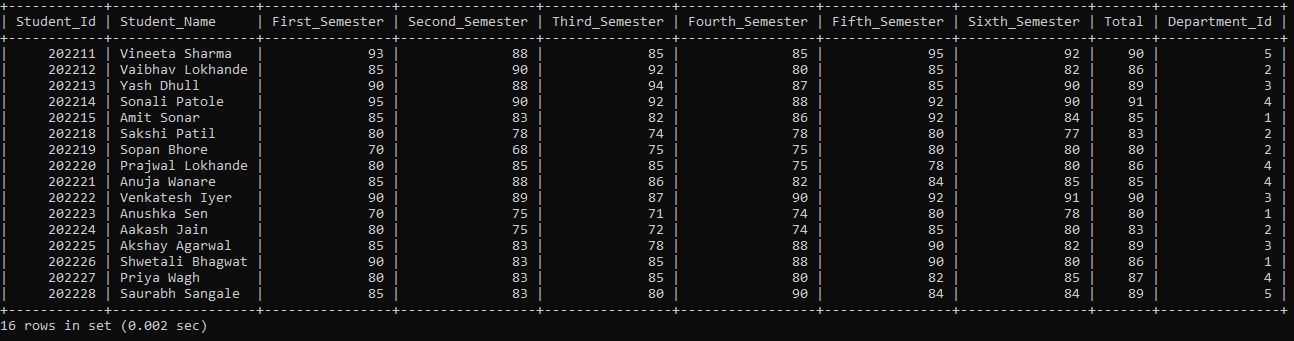
Example 3: Execute a query to retrieve the information from the table where the fourth_semester percentage is less than equal to 85.
SELECT Student_Id, Student_Name, First_Semester, Second_Semester, Third_Semester, Fourth_Semester, Fifth_Semester, Sixth_Semester, Total, Department_Id FROM D_Students WHERE Fourth_Semester <= 85;
In the above SQL SELECT WHERE clause example, we have displayed the student's information from the table whose fourth_semester percentage is less than equal to 85. Here, we have used less than equal to the comparison operator in the query.
The following output is as follows:
| Student_Id | Student_Name | First_ Semester | Second_ Semester | Third_ Semester | Fourth_ Semester | Fifth_ Semester | Sixth_ Semester | Total | Department_ Id |
| 202111 | Vineeta Sharma | 93 | 88 | 85 | 85 | 95 | 92 | 90 | 5 |
| 202112 | Vaibhav Lokhande | 85 | 90 | 92 | 80 | 85 | 82 | 86 | 2 |
| 202116 | Meena Mishra | 78 | 75 | 80 | 74 | 85 | 77 | 78 | 3 |
| 202117 | Mahesh Kumbhar | 75 | 83 | 75 | 78 | 80 | 76 | 82 | 5 |
| 202118 | Sakshi Patil | 80 | 78 | 74 | 78 | 80 | 77 | 83 | 2 |
| 202119 | Sopan Bhore | 70 | 68 | 75 | 75 | 80 | 80 | 80 | 2 |
| 202220 | Prajwal Lokhande | 80 | 85 | 85 | 75 | 78 | 80 | 86 | 4 |
| 202221 | Anuja Wanare | 85 | 88 | 86 | 82 | 84 | 85 | 85 | 4 |
| 202223 | Anushka Sen | 70 | 75 | 71 | 74 | 80 | 78 | 80 | 1 |
| 202224 | Aakash Jain | 80 | 75 | 72 | 74 | 85 | 80 | 83 | 2 |
| 202227 | Priya Wagh | 80 | 83 | 85 | 80 | 82 | 85 | 87 | 4 |
| 202229 | Manthan Koli | 85 | 75 | 84 | 78 | 82 | 80 | 86 | 2 |
SELECT WHERE Clause with the Logical Operators
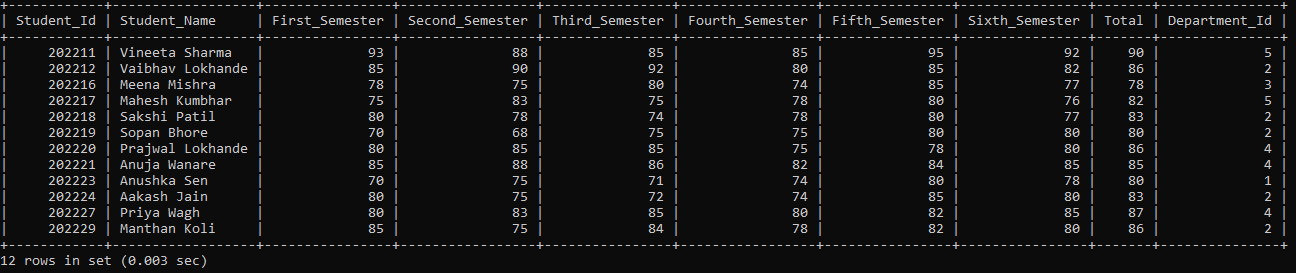
Example 1: Execute a query to retrieve the information from the table where fourth_semester is less than 80 OR fifth_semester is greater than 85.
SELECT Student_Id, Student_Name, First_Semester, Second_Semester, Third_Semester, Fourth_Semester, Fifth_Semester, Sixth_Semester, Total, Department_Id FROM D_Students WHERE Fourth_Semester < 80 OR Fifth_Semester > 85;
In the above SQL SELECT WHERE clause example, we have displayed the student's information from the table whose fourth_semester percentage is less than 80 OR fifth_semester percentage is greater than 85.
The following output is as follows:
| Student_Id | Student_Name | First_ Semester | Second_ Semester | Third_ Semester | Fourth_ Semester | Fifth_ Semester | Sixth_ Semester | Total | Department_ Id |
| 202111 | Vineeta Sharma | 93 | 88 | 85 | 85 | 95 | 92 | 90 | 5 |
| 202114 | Sonali Patole | 95 | 90 | 92 | 88 | 92 | 90 | 91 | 4 |
| 202115 | Amit Sonar | 85 | 83 | 82 | 86 | 92 | 84 | 85 | 1 |
| 202116 | Meena Mishra | 78 | 75 | 80 | 74 | 85 | 77 | 78 | 3 |
| 202117 | Mahesh Kumbhar | 75 | 83 | 75 | 78 | 80 | 76 | 82 | 5 |
| 202118 | Sakshi Patil | 80 | 78 | 74 | 78 | 80 | 77 | 83 | 2 |
| 202119 | Sopan Bhore | 70 | 68 | 75 | 75 | 80 | 80 | 80 | 2 |
| 202220 | Prajwal Lokhande | 80 | 85 | 85 | 75 | 78 | 80 | 86 | 4 |
| 202222 | Venkatesh Iyer | 90 | 89 | 87 | 90 | 92 | 91 | 90 | 3 |
| 202223 | Anushka Sen | 70 | 75 | 71 | 74 | 80 | 78 | 80 | 1 |
| 202224 | Aakash Jain | 80 | 75 | 72 | 74 | 85 | 80 | 83 | 2 |
| 202225 | Akshay Agarwal | 85 | 83 | 78 | 88 | 90 | 82 | 89 | 3 |
| 202226 | Shwetali Bhagwat | 90 | 83 | 85 | 88 | 90 | 80 | 86 | 1 |
| 202229 | Manthan Koli | 85 | 75 | 84 | 78 | 82 | 80 | 86 | 2 |
| 202230 | Mayur Jain | 80 | 88 | 87 | 90 | 92 | 90 | 88 | 1 |
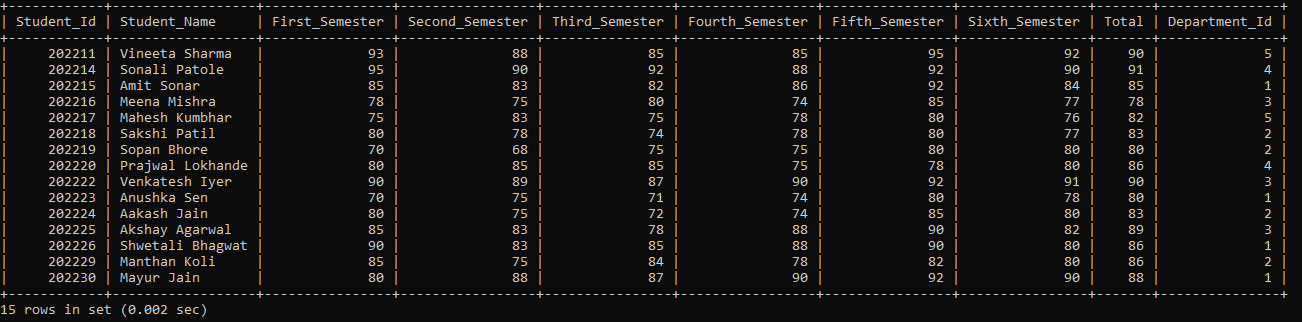
Example 2: Execute a query to retrieve the information from the table where fourth_semester is greater than 80 and fifth_semester is greater than 85.
SELECT Student_Id, Student_Name, First_Semester, Second_Semester, Third_Semester, Fourth_Semester, Fifth_Semester, Sixth_Semester, Total, Department_Id FROM D_Students WHERE Fourth_Semester > 80 AND Fifth_Semester > 85;
In the above SQL SELECT WHERE clause example, we have displayed the student's information from the table whose fourth_semester percentage is greater than 80 and fifth_semester percentage is greater than 85.
The following output is as follows:
| Student_Id | Student_Name | First_ Semester | Second_ Semester | Third_ Semester | Fourth_ Semester | Fifth_ Semester | Sixth_ Semester | Total | Department_ Id |
| 202111 | Vineeta Sharma | 93 | 88 | 85 | 85 | 95 | 92 | 90 | 5 |
| 202114 | Sonali Patole | 95 | 90 | 92 | 88 | 92 | 90 | 91 | 4 |
| 202115 | Amit Sonar | 85 | 83 | 82 | 86 | 92 | 84 | 85 | 1 |
| 202222 | Venkatesh Iyer | 90 | 89 | 87 | 90 | 92 | 91 | 90 | 3 |
| 202225 | Akshay Agarwal | 85 | 83 | 78 | 88 | 90 | 82 | 89 | 3 |
| 202226 | Shwetali Bhagwat | 90 | 83 | 85 | 88 | 90 | 80 | 86 | 1 |
| 202230 | Mayur Jain | 80 | 88 | 87 | 90 | 92 | 90 | 88 | 1 |

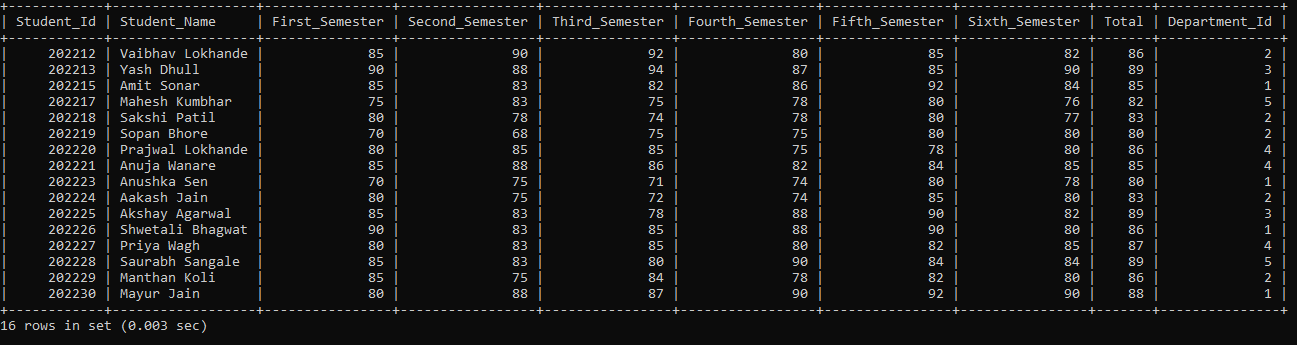
Example 3: Execute a query to retrieve the information from the table where the Total field starts with the number 8.
SELECT Student_Id, Student_Name, First_Semester, Second_Semester, Third_Semester, Fourth_Semester, Fifth_Semester, Sixth_Semester, Total, Department_Id FROM D_Students WHERE Total LIKE '8%';
In the above SQL SELECT WHERE clause example, we have displayed the student's information from the table where total student percentages start with the number 8.
The following output is as follows:
| Student_Id | Student_Name | First_ Semester | Second_ Semester | Third_ Semester | Fourth_ Semester | Fifth_ Semester | Sixth_ Semester | Total | Department_ Id |
| 202112 | Vaibhav Lokhande | 85 | 90 | 92 | 80 | 85 | 82 | 86 | 2 |
| 202113 | Yash Dhull | 90 | 88 | 94 | 87 | 85 | 90 | 89 | 3 |
| 202115 | Amit Sonar | 85 | 83 | 82 | 86 | 92 | 84 | 85 | 1 |
| 202117 | Mahesh Kumbhar | 75 | 83 | 75 | 78 | 80 | 76 | 82 | 5 |
| 202118 | Sakshi Patil | 80 | 78 | 74 | 78 | 80 | 77 | 83 | 2 |
| 202119 | Sopan Bhore | 70 | 68 | 75 | 75 | 80 | 80 | 80 | 2 |
| 202220 | Prajwal Lokhande | 80 | 85 | 85 | 75 | 78 | 80 | 86 | 4 |
| 202221 | Anuja Wanare | 85 | 88 | 86 | 82 | 84 | 85 | 85 | 4 |
| 202223 | Anushka Sen | 70 | 75 | 71 | 74 | 80 | 78 | 80 | 1 |
| 202224 | Aakash Jain | 80 | 75 | 72 | 74 | 85 | 80 | 83 | 2 |
| 202225 | Akshay Agarwal | 85 | 83 | 78 | 88 | 90 | 82 | 89 | 3 |
| 202226 | Shwetali Bhagwat | 90 | 83 | 85 | 88 | 90 | 80 | 86 | 1 |
| 202227 | Priya Wagh | 80 | 83 | 85 | 80 | 82 | 85 | 87 | 4 |
| 202228 | Saurabh Sangale | 85 | 83 | 80 | 90 | 84 | 84 | 89 | 5 |
| 202229 | Manthan Koli | 85 | 75 | 84 | 78 | 82 | 80 | 86 | 2 |
| 202230 | Mayur Jain | 80 | 88 | 87 | 90 | 92 | 90 | 88 | 1 |
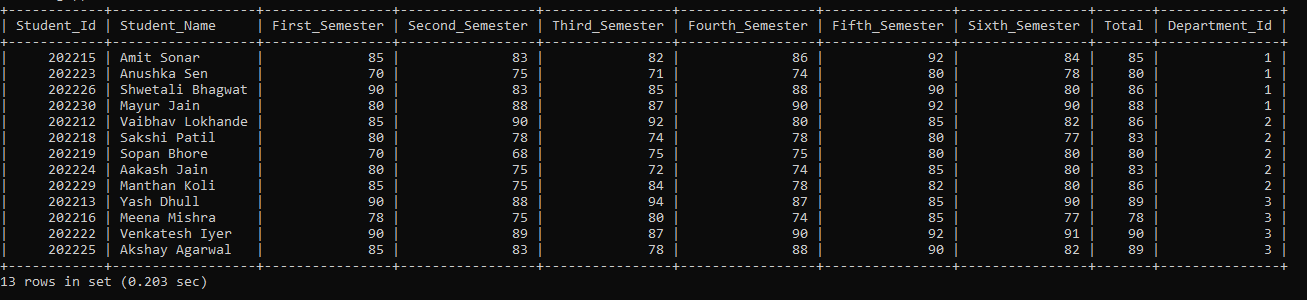
Example 4: Write a sub-query to retrieve the information from the table where department name is ‘Computer Engineering’, ‘Information Technology’, and Mechanical Engineering.
SELECT Student_Id, Student_Name, First_Semester, Second_Semester, Third_Semester, Fourth_Semester, Fifth_Semester, Sixth_Semester, Total, Department_Id FROM D_Students WHERE Department_Id IN (SELECT Department_Id FROM Department WHERE Department_Name IN ('Computer Engineering', 'Information Technology', 'Mechanical Engineering'));
In the above SQL SELECT WHERE clause example, we have displayed the student's information from the table where the student department name is 'Computer Engineering', 'Information Technology', and 'Mechanical Engineering'.
The following output is as follows:
| Student_Id | Student_Name | First_ Semester | Second_ Semester | Third_ Semester | Fourth_ Semester | Fifth_ Semester | Sixth_ Semester | Total | Department_ Id |
| 202115 | Amit Sonar | 85 | 83 | 82 | 86 | 92 | 84 | 85 | 1 |
| 202223 | Anushka Sen | 70 | 75 | 71 | 74 | 80 | 78 | 80 | 1 |
| 202226 | Shwetali Bhagwat | 90 | 83 | 85 | 88 | 90 | 80 | 86 | 1 |
| 202230 | Mayur Jain | 80 | 88 | 87 | 90 | 92 | 90 | 88 | 1 |
| 202112 | Vaibhav Lokhande | 85 | 90 | 92 | 80 | 85 | 82 | 86 | 2 |
| 202118 | Sakshi Patil | 80 | 78 | 74 | 78 | 80 | 77 | 83 | 2 |
| 202119 | Sopan Bhore | 70 | 68 | 75 | 75 | 80 | 80 | 80 | 2 |
| 202224 | Aakash Jain | 80 | 75 | 72 | 74 | 85 | 80 | 83 | 2 |
| 202229 | Manthan Koli | 85 | 75 | 84 | 78 | 82 | 80 | 86 | 2 |
| 202113 | Yash Dhull | 90 | 88 | 94 | 87 | 85 | 90 | 89 | 3 |
| 202116 | Meena Mishra | 78 | 75 | 80 | 74 | 85 | 77 | 78 | 3 |
| 202222 | Venkatesh Iyer | 90 | 89 | 87 | 90 | 92 | 91 | 90 | 3 |
| 202225 | Akshay Agarwal | 85 | 83 | 78 | 88 | 90 | 82 | 89 | 3 |
Example 5: Write a query to retrieve the information of those students from the table whose student name didn't start with the letter 'M'.
SELECT Student_Id, Student_Name, First_Semester, Second_Semester, Third_Semester, Fourth_Semester, Fifth_Semester, Sixth_Semester, Total, Department_Id FROM D_Students WHERE NOT Student_Name LIKE 'M%';
In the above SQL SELECT WHERE clause example, we have displayed the student's information of those students from the table whose student's name didn't start with the letter 'M'.
The following output is as follows:
| Student_Id | Student_Name | First_ Semester | Second_ Semester | Third_ Semester | Fourth_ Semester | Fifth_ Semester | Sixth_ Semester | Total | Department_ Id |
| 202111 | Vineeta Sharma | 93 | 88 | 85 | 85 | 95 | 92 | 90 | 5 |
| 202112 | Vaibhav Lokhande | 85 | 90 | 92 | 80 | 85 | 82 | 86 | 2 |
| 202113 | Yash Dhull | 90 | 88 | 94 | 87 | 85 | 90 | 89 | 3 |
| 202114 | Sonali Patole | 95 | 90 | 92 | 88 | 92 | 90 | 91 | 4 |
| 202115 | Amit Sonar | 85 | 83 | 82 | 86 | 92 | 84 | 85 | 1 |
| 202118 | Sakshi Patil | 80 | 78 | 74 | 78 | 80 | 77 | 83 | 2 |
| 202119 | Sopan Bhore | 70 | 68 | 75 | 75 | 80 | 80 | 80 | 2 |
| 202220 | Prajwal Lokhande | 80 | 85 | 85 | 75 | 78 | 80 | 86 | 4 |
| 202221 | Anuja Wanare | 85 | 88 | 86 | 82 | 84 | 85 | 85 | 4 |
| 202222 | Venkatesh Iyer | 90 | 89 | 87 | 90 | 92 | 91 | 90 | 3 |
| 202223 | Anushka Sen | 70 | 75 | 71 | 74 | 80 | 78 | 80 | 1 |
| 202224 | Aakash Jain | 80 | 75 | 72 | 74 | 85 | 80 | 83 | 2 |
| 202225 | Akshay Agarwal | 85 | 83 | 78 | 88 | 90 | 82 | 89 | 3 |
| 202226 | Shwetali Bhagwat | 90 | 83 | 85 | 88 | 90 | 80 | 86 | 1 |
| 202227 | Priya Wagh | 80 | 83 | 85 | 80 | 82 | 85 | 87 | 4 |
| 202228 | Saurabh Sangale | 85 | 83 | 80 | 90 | 84 | 84 | 89 | 5 |