×

Tableau Motion Chart

Motion charts are a type of chart that allows you to visualize in action displaying the changes of your data over time by indicating the movement of data points within the specified changes in the space as well as in the color of the lines.  Motion chart helps to view the entire trail of how the data that has evolved over time and not just in a snap of the data. It will help us work and represent the data in a better way. Tableau needs one Measure and one Time Dimension to create a Motion chart.
Creating a Motion Chart

To create a simple Motion Chart, the following are the steps:
  • Open the Tableau Desktop and connect to your data source.
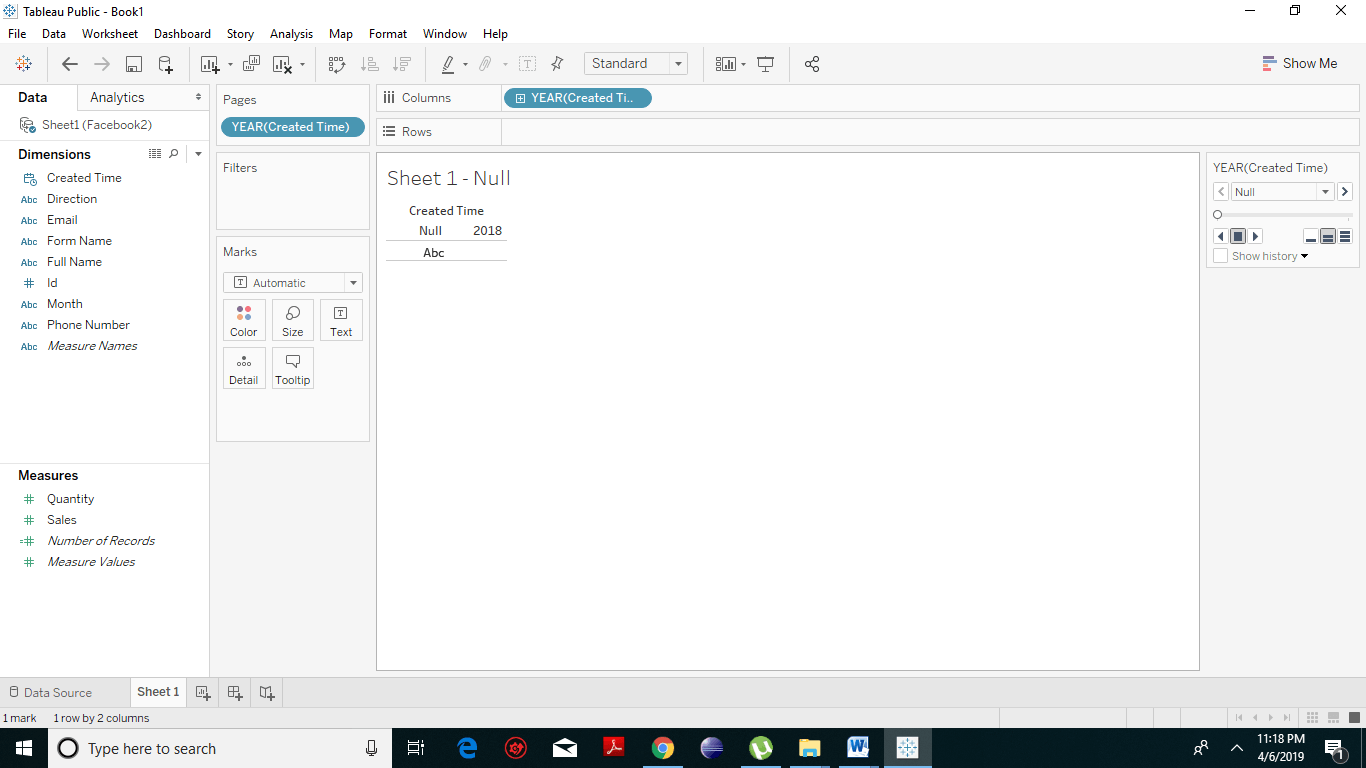
  • Drag and drop the Dimension field to the Columns Shelf. Place the same file to the Pages Shelf.
Tableau Motion Chart 1
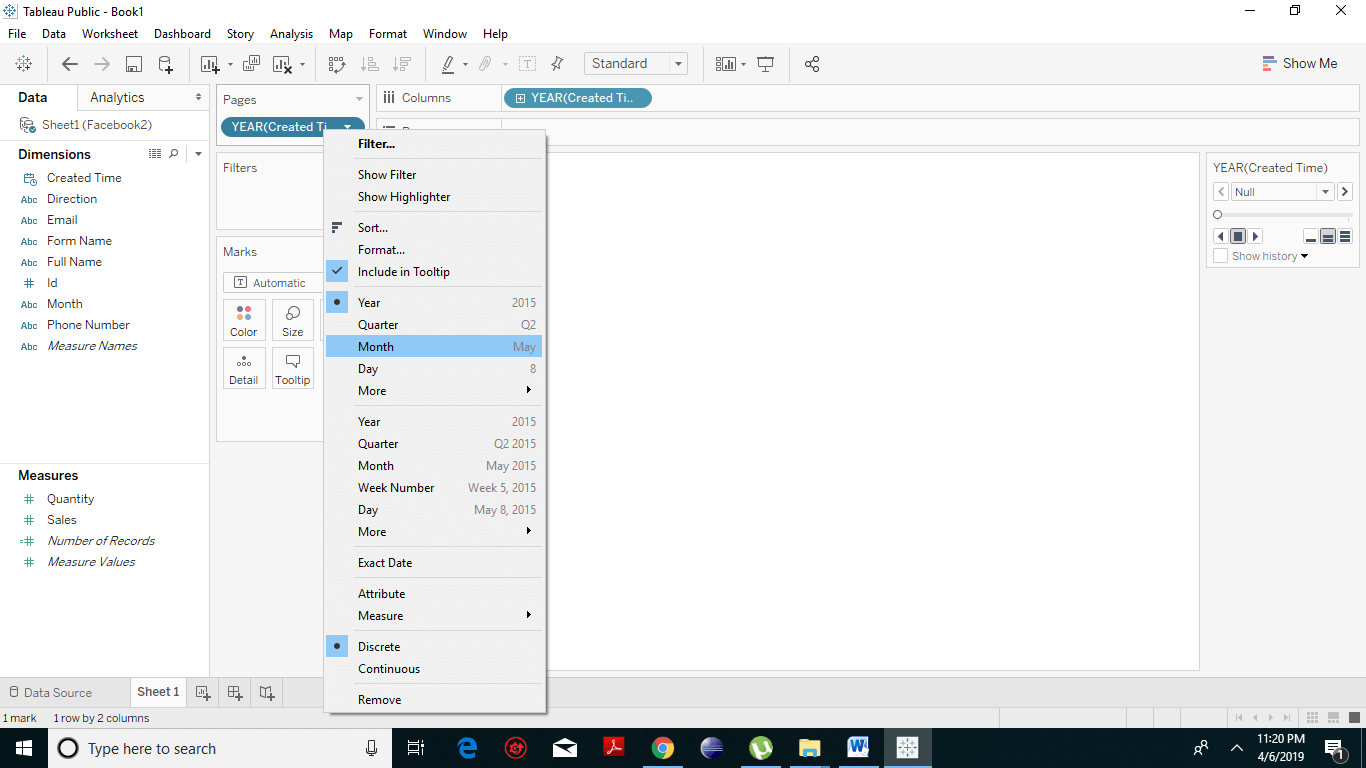
  • In the Pages shelf, right-click on the Created Date and choose Month.
Tableau Motion Chart 2
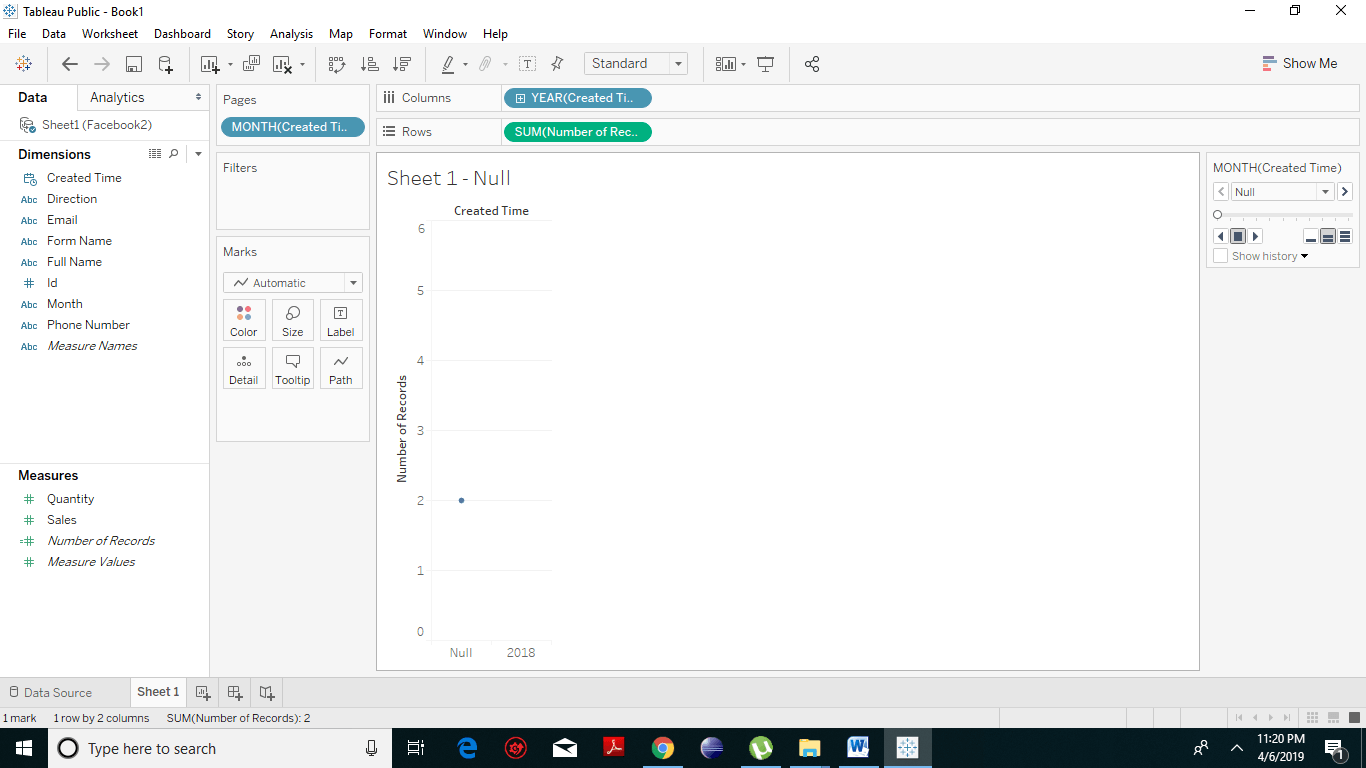
  • Then drag the measure (here we have taken Number of Records) to the Rows Shelf. The resulting chart appears.
Tableau Motion Chart 3
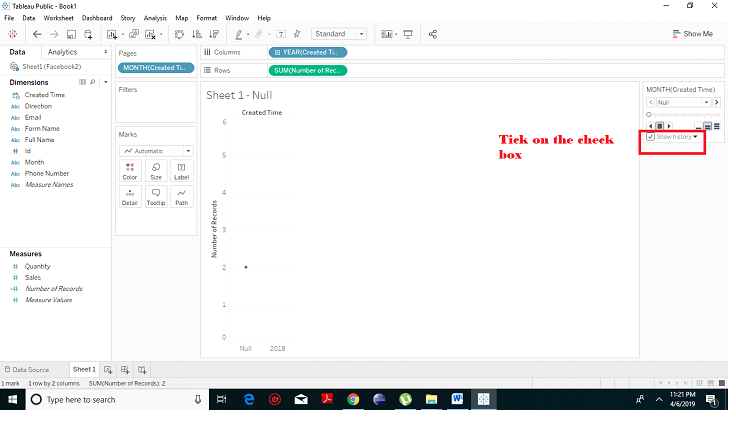
  • Put a check mark on the tick box next to Show History to see historically what’s happening.
Tableau Motion Chart 4
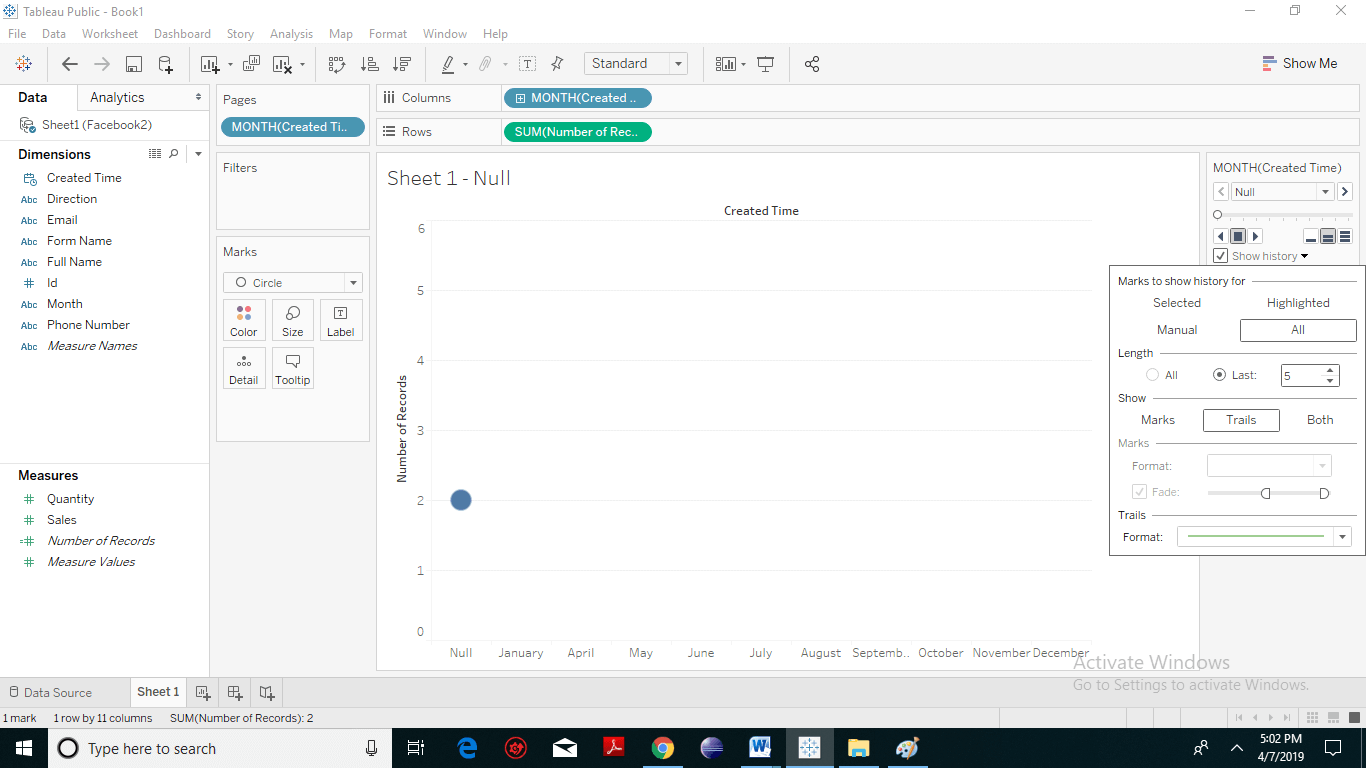
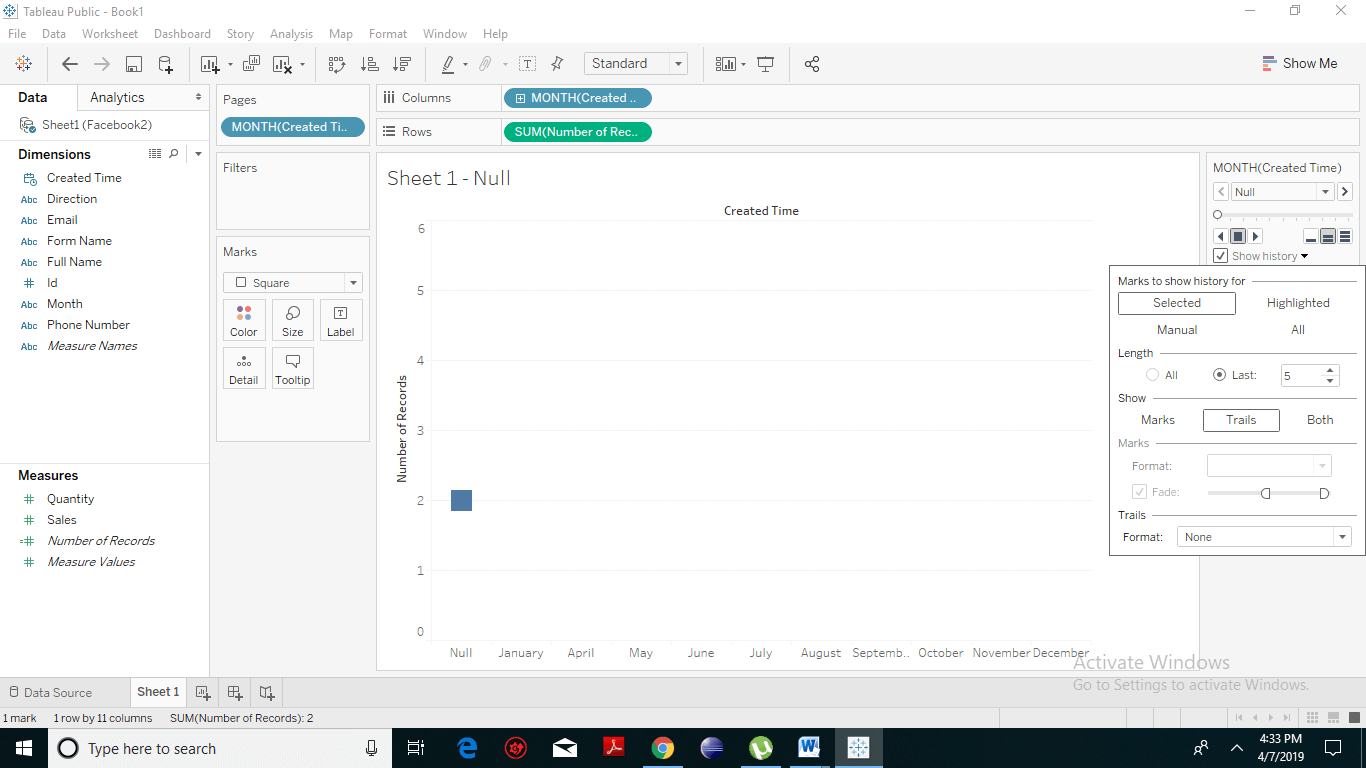
  • Click on the Show History. A dropdown arrow next to it. We want to show all the marks regardless of whether or not they’re in the past. So we select “All”.
Tableau Motion Chart 5
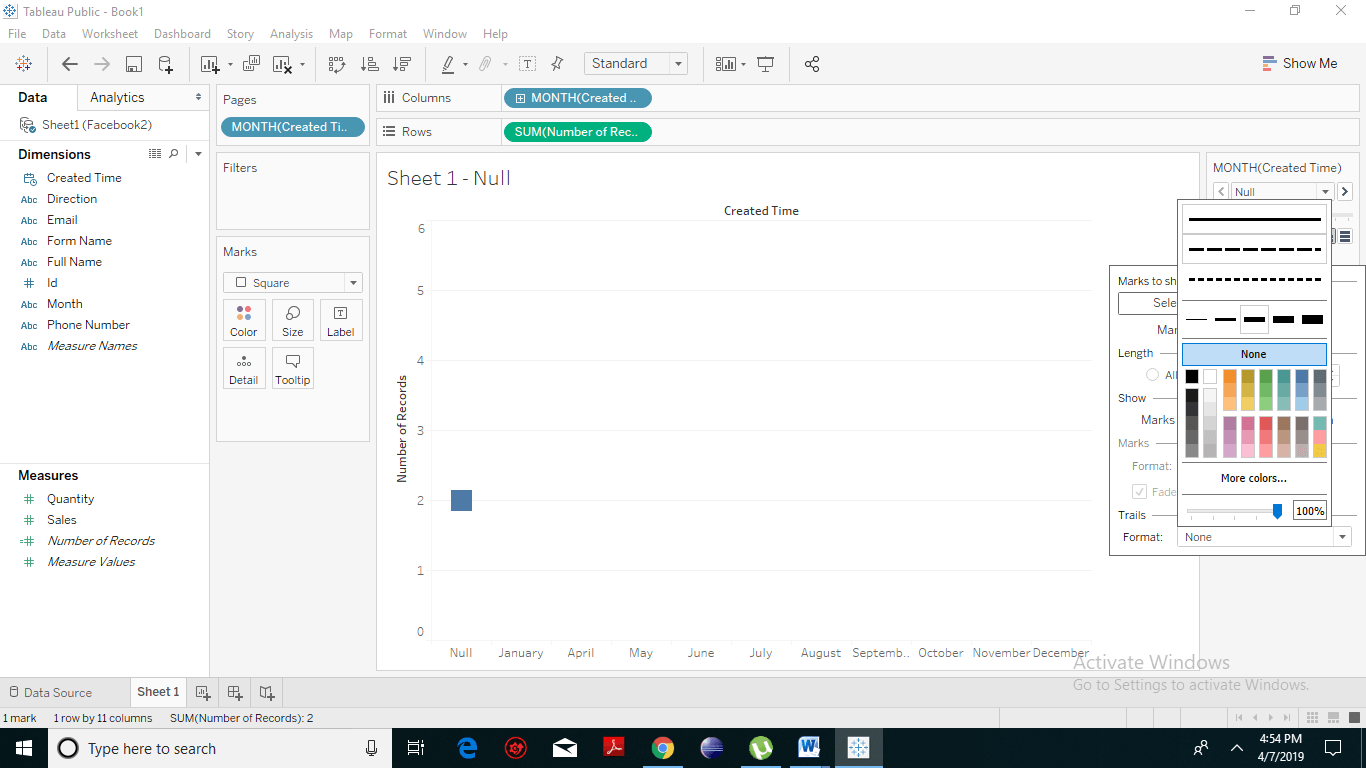
  • Then we can also adjust the way, the marks are being displayed so instead of showing the actual mark we can choose a “trail” or we can also select “Both”.
Tableau Motion Chart 6
  • Selecting “Marks” shows only the points and selecting “Trails” shows only the line. So here, we have selected “Trail” option. In the trail format, you can also change the way the trail is being displayed so let’s change that to be a simple dotted line.
Tableau Motion Chart 7 Hit the Play button. The following chart appears. Tableau Motion Chart 8
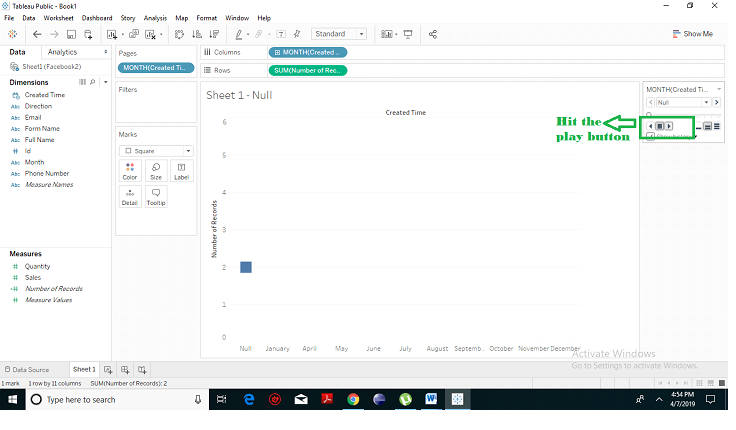
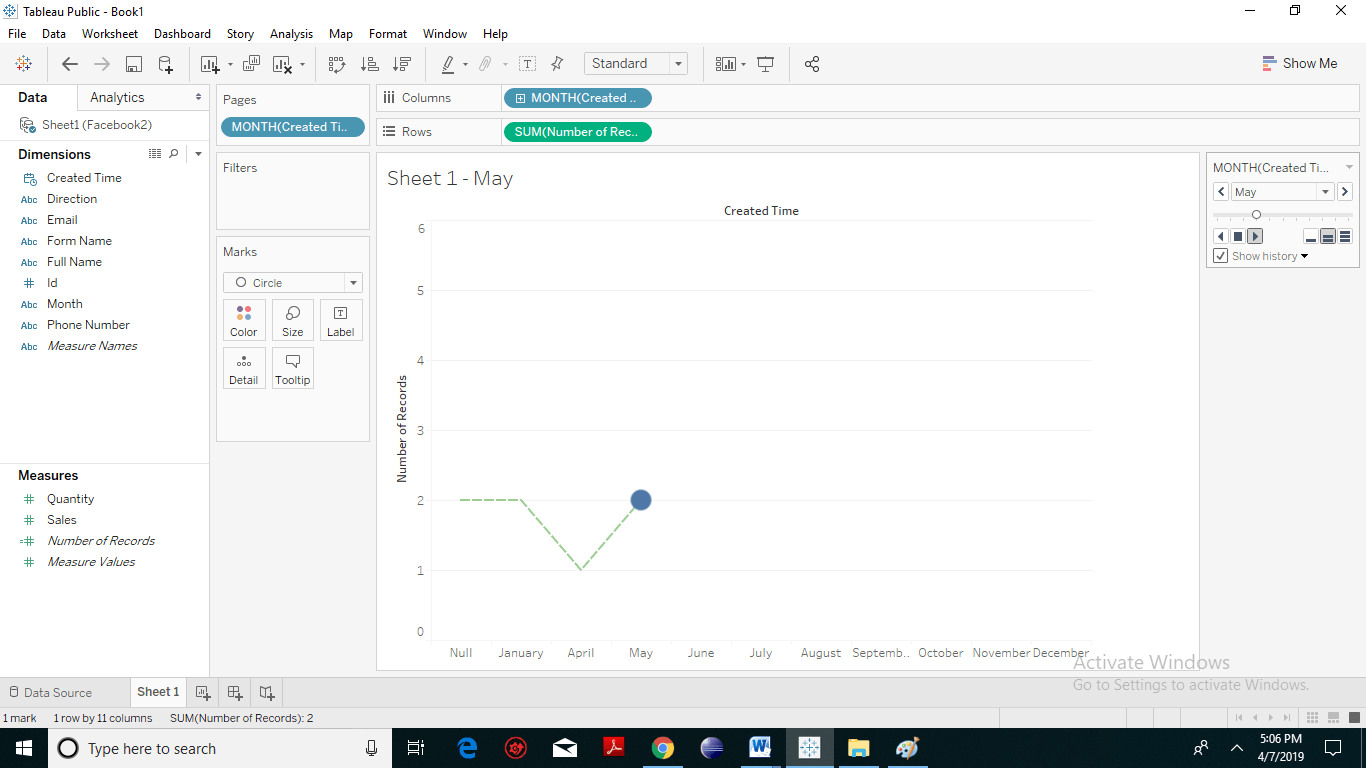
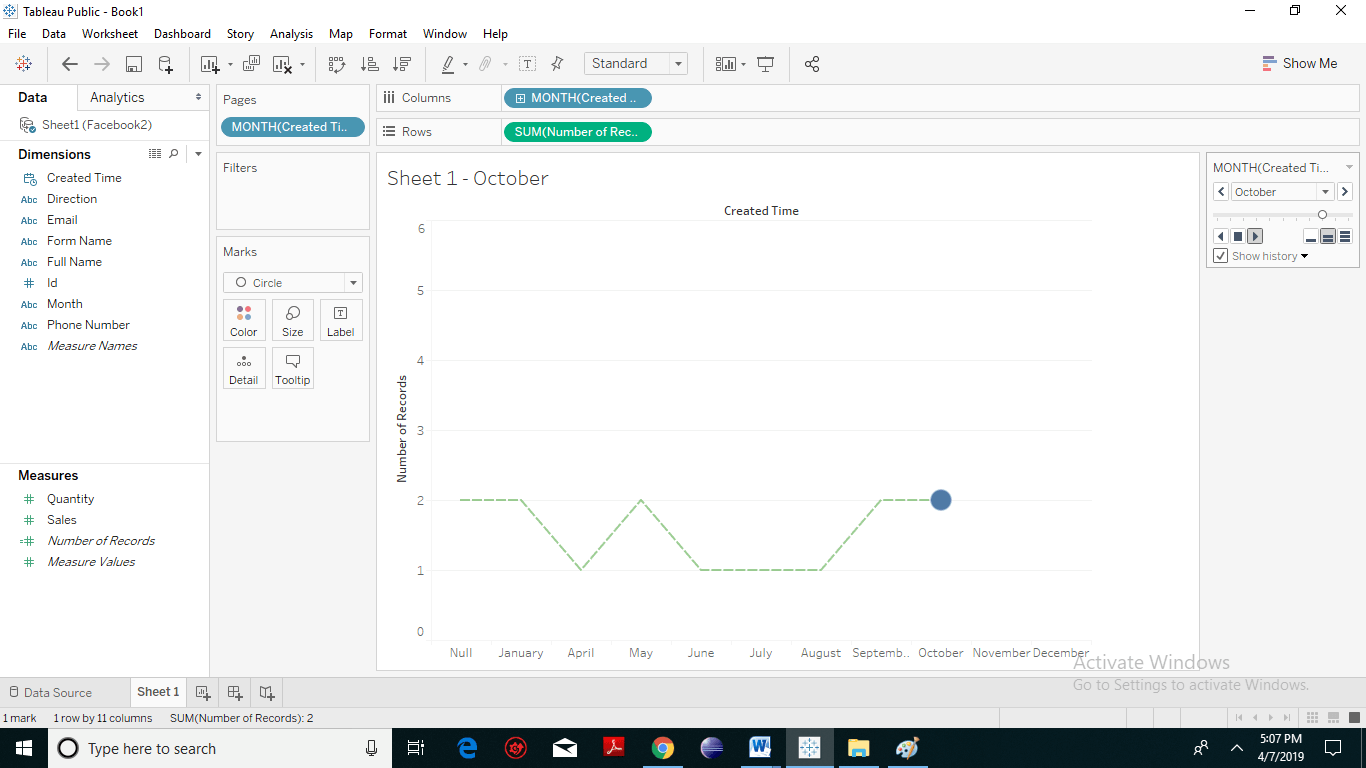
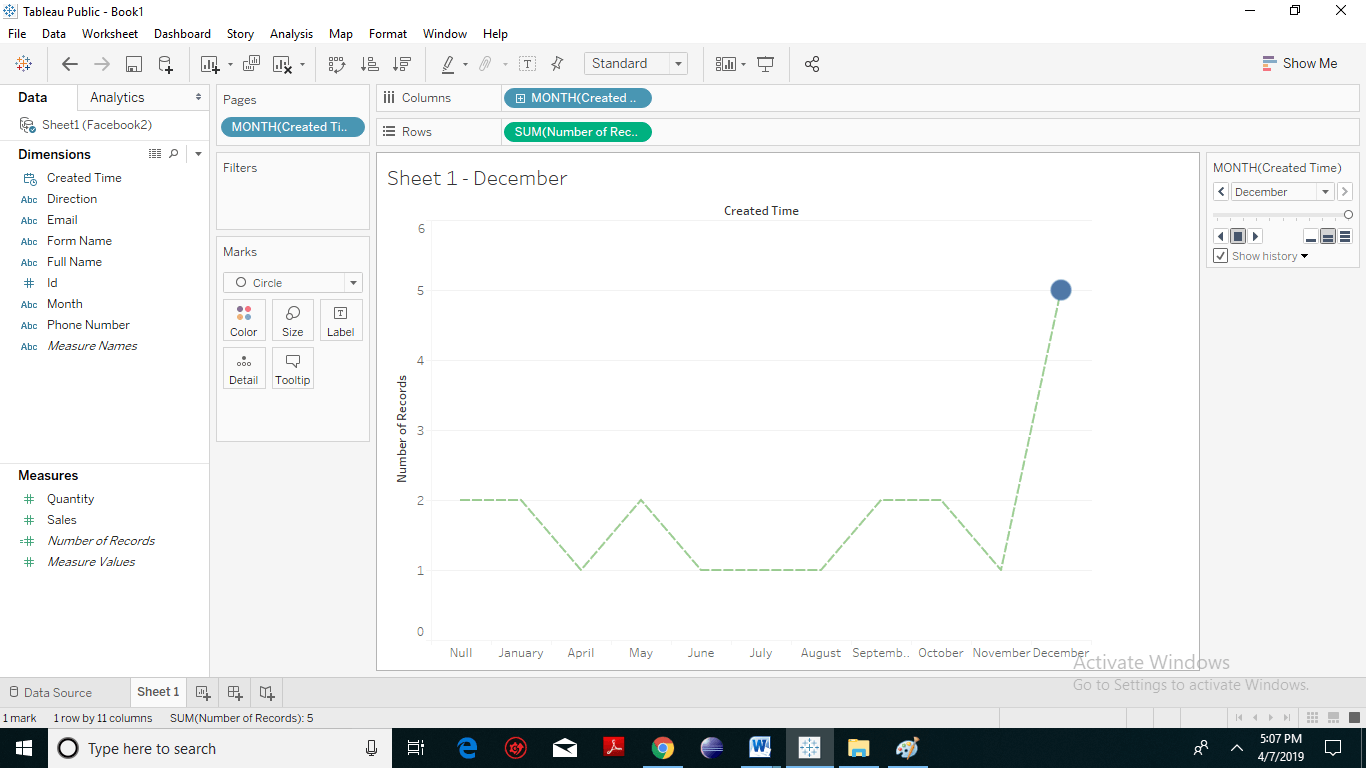
  • You can see the motion chart is working in a trial format with dotted line and it’s plotting out on a month-month from January to December basis precisely what went on with that data. You will notice that as the information changes, the recent months get a darker shade of color and the historical data gets a lighter shade of color. The following screenshots represents the path of the Motion Chart:
Tableau Motion Chart 9   Tableau Motion Chart 10   Tableau Motion Chart 11

Two-Dimensional Motion Chart

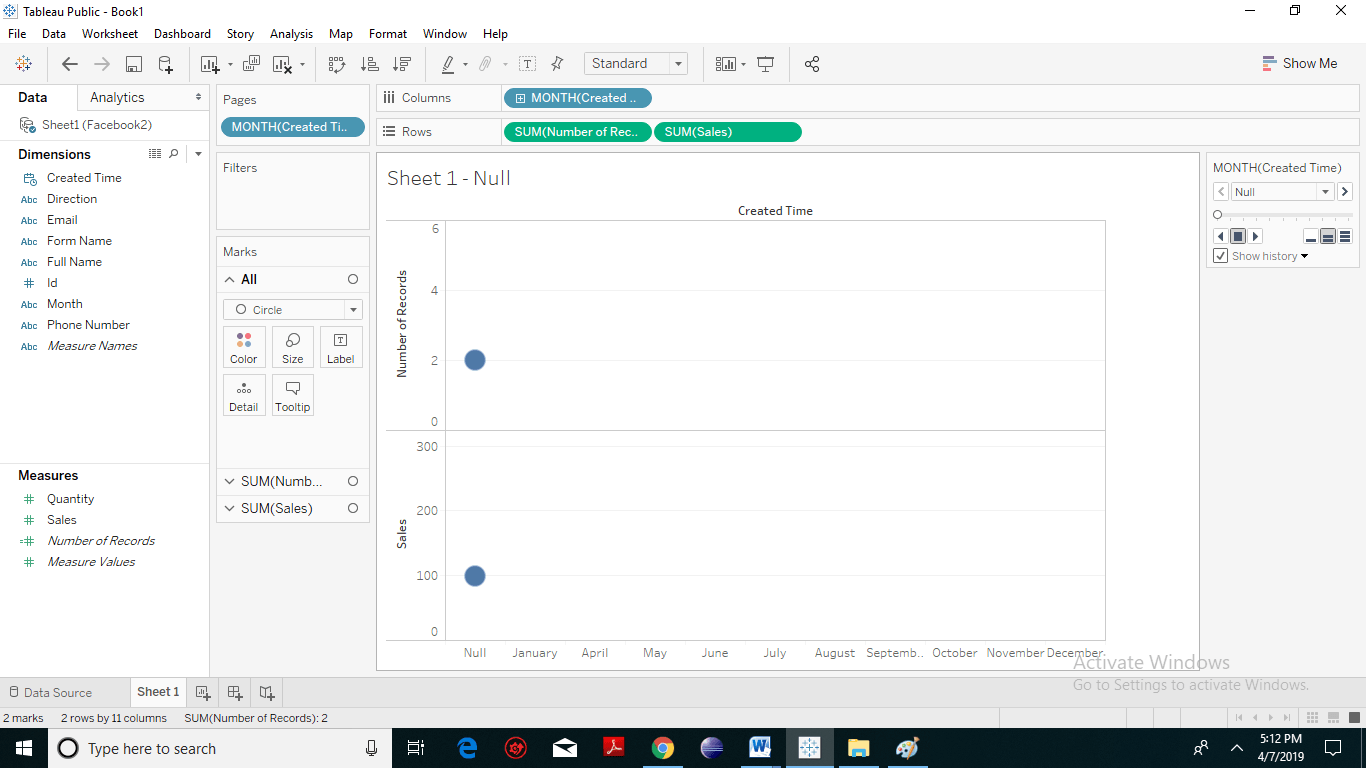
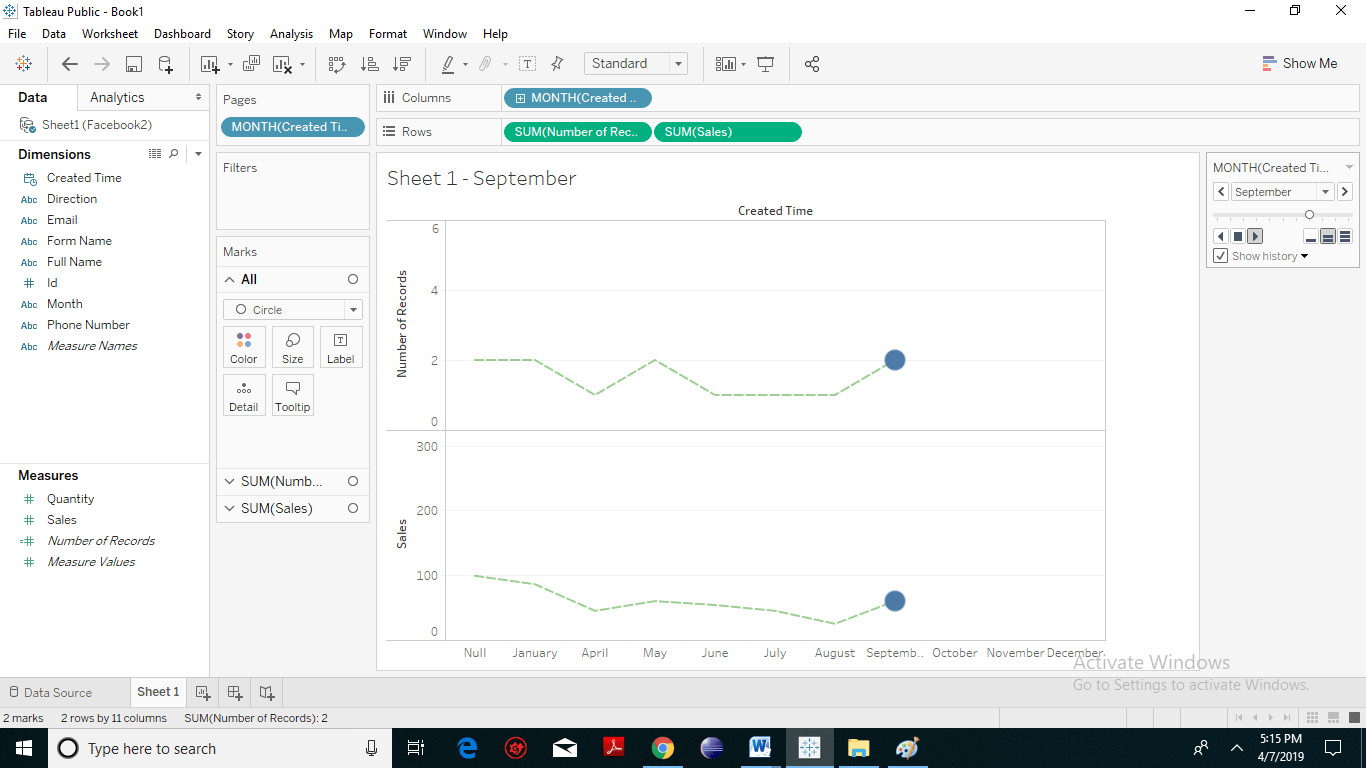
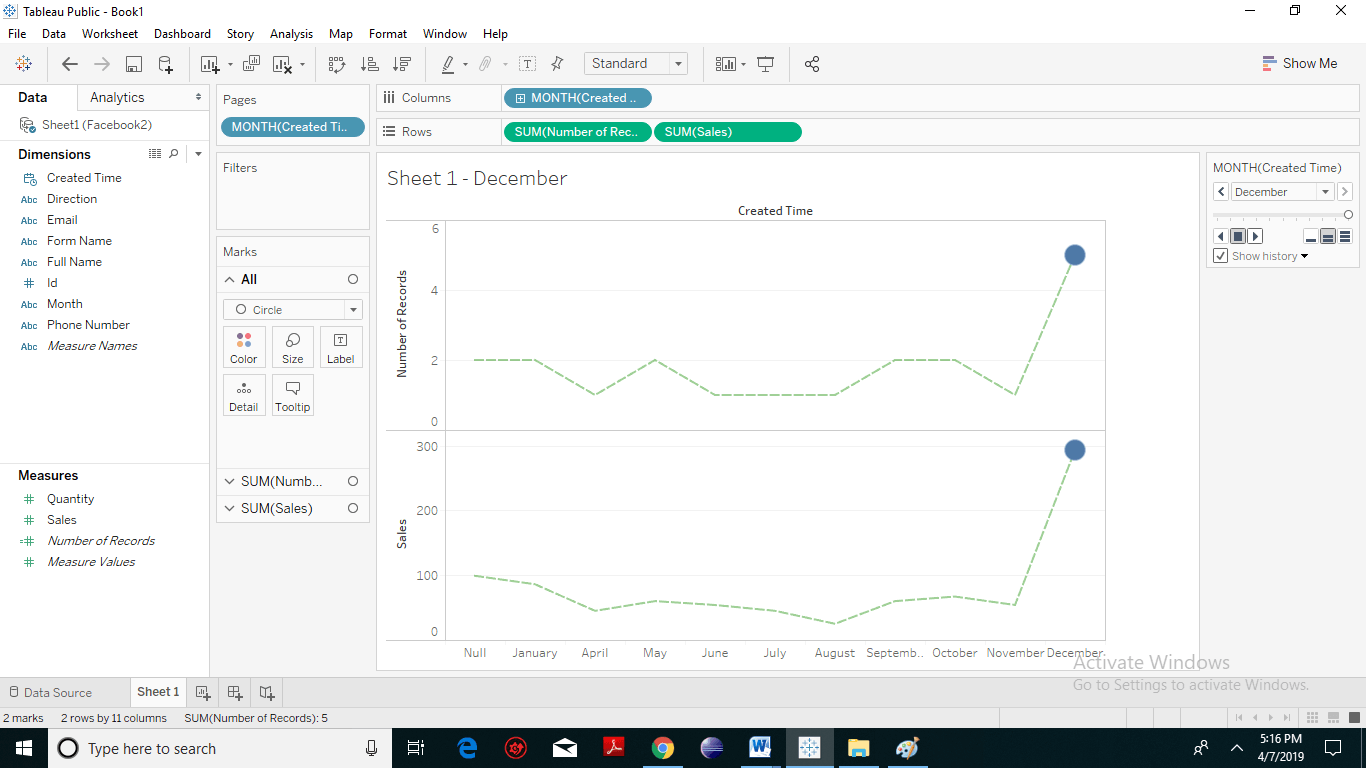
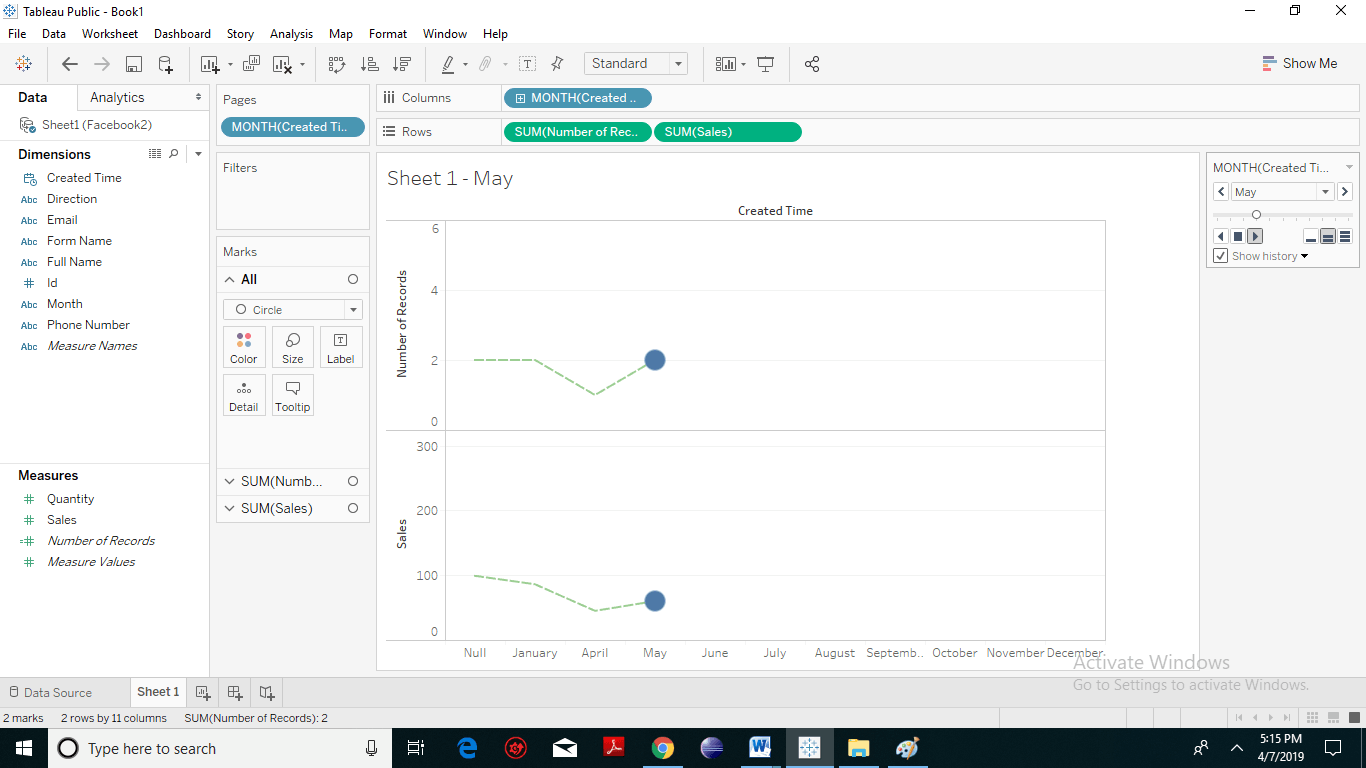
For creating two-dimensional Motion Chart drag and drop another measure field to the Rows shelf. You will notice two different windows. Tableau Motion Chart 12 Hit the play button. And you will notice both the motion charts operating simultaneously. The following screenshots represents the path of the two-dimensional Motion Chart Tableau Motion Chart 13 Tableau Motion Chart 14 Tableau Motion Chart 15
Related Topics

Tableau Histogram Chart

Histogram chart in Tableau A histogram is a chart that represents the accurate distribution of numerical data. A histogram represents the actual frequencies of values of a variable bucketed into ranges....

2 minutes read.

Advantages and Disadvantages of Tableau

Advantages of Tableau Speed In the early stages, the Tableau software becomes popular because of its momentum with which it can analyze hundreds or even millions of rows and also gives...

3 minutes read.

Tableau Visualization

Data Visualization Using Tableau In this chapter, we will learn about visualization. We will come across and click the ‘Sheet’ which is where you start to build our visualization. Let’s take a look...

5 minutes read.

How to download and install tableau setup for free?

Tableau Environmental setup In this section, we will learn how to download and install tableau for free. After downloading tableau setup, the installation is a very easy process. The following steps and screenshots...

1 minute read.

Tableau String Functions

Tableau Calculation string functions with Examples Tableau has many inbuilt string functions, which allow you to manipulate string data. They are used to for comparing, concatenating and for replacing few characters...

2 minutes read.

Application of Tableau

Tableau is a powerful data visualization tool used in the Business Intelligence Industry. It is used for many online training modules and data sets relevant to business or marketing. Tableau...

2 minutes read.

Components of Tableau Server

Core Components of Tableau Server Tableau Server's work is directed primarily with the following four server processes: Application Server VizOL Server Data Server Gateway Application Server: It controls hold browsing and various...

2 minutes read.

Tableau Box Plot

How to Create Tableau Box Plot? The box plot is the type of chart that shows the distribution of values along an axis. It is also known as a box-and-whisker plot....

2 minutes read.

Tableau Bullet Chart

How to Create Tableau Bullet Chart? A bullet chart is a type of chart that is used to compare the value of one measure with another measure. It is a variation...

2 minutes read.

Introduction to Tableau

 What is Business Intelligence? Companies use business intelligence technologies to collect, analyze and present data to create actionable information. Today’s businesses are always seeking insights about their customers, products, and services. So...

3 minutes read.

Tableau file Extensions

Tableau data file Extensions The output of Tableau’s data analysis can be saved in different formats, which further can be distributed on different platforms. The various forms are reflected as different...

2 minutes read.

Tableau Operator

Operator in Tableau An operator is referred to as a symbol that often tells the compiler to execute certain mathematical or logical operations. Tableau accepts the same operators which are used...

4 minutes read.

Tableau Quick Filters

Tableau Filters help to have enough functionality to solve most of the common filtering needs. Quick filters are simply a filter that has been exposed in a view. But, it...

2 minutes read.

Tableau LOD Expressions

LOD Expressions LOD or Level of Detail expressions computes values at the data source and the visualization level instead of bringing all the data to the Tableau interface. However, LOD expressions...

3 minutes read.

Tableau Connectivity with Excel

Connect Excel to Tableau server Step by Step Let’s get started by connecting tableau to a data source:   Step: 1 Click on Microsoft Excel   Step: 2 Choose your excel file and open it...

1 minute read.

Tableau Pie Chart

A pie chart is a type of graph in which a circle is divided into sectors to represent the data with different sizes and colors. In Tableau, the slices of...

1 minute read.

Tableau Data Terminology

Learn Tableau Data Terminology Tableau Tool drives a lot of visualizations. It is one of the dominant components for Data Analysis. It has many exclusive terms and descriptions. One needs to get...

4 minutes read.

Tableau Data Blending

Introduction to Tableau Data Blending Data Blending is a very advantageous feature in Tableau. Data blending is referred to as a technique where on a single worksheet, the data is blended...

3 minutes read.

Tableau Date Functions

Tableau Date Functions with Examples Dates are crucial fields which are widely used in data analysis. Hence, Tableau provides a large number of inbuilt date functions that allows you to manipulate...

2 minutes read.

Tableau Bump Chart Tutorial

How to Create Tableau Bump Chart? A Bump Chart shows a comparison between two dimensions using a measure of your choice. It is a line chart which is used when we...

2 minutes read.