
×

Angular 8 Forms

Angular forms are used to handle the user's input. We use Angular form in our application to authorize users to log in, to update profile, to enter information, and to perform many other data-entry tasks.

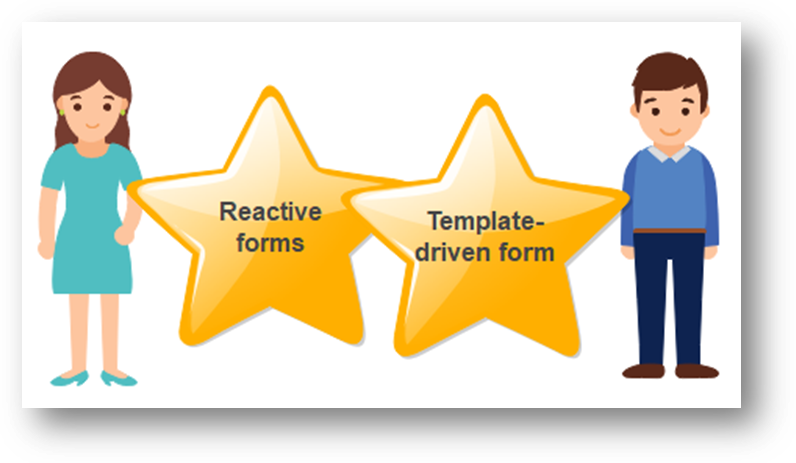
In Angular 8, there are two approaches to handle the user's input through forms:
angular8 forms
  • Reactive forms
  • Template-driven forms

Both methods are used to collect user input event from the view, validate the user input, create a form model to update, and provide a way to track changes.

Reactive and template-driven forms process and manage form data differently. Each offers different advantages.

Reactive forms

Reactive forms are more robust, and they are more scalable, reusable, and testable. If forms are a vital part of our application or are already using reactive patterns for building our app, handle responsive forms. 

Template-driven forms

It is useful for adding a simple form to an app, such as an email list signup form to an app, such as an email list signup form.  It is easy to add to an app, but they don't scale as well as reactive forms. If we have fundamental form requirements and logic that can be managed in the template and use template-driven forms.

Difference between Reactive and Template-driven Forms:

 Index Reactive Forms Template-driven Forms
Setup (form model) Responsive forms are more explicit. They are created in the component class. Template-driven forms are less explicit. Directives create them.
Data model Structured Unstructured
Predictability Synchronous Asynchronous
Form Validation Functions Directives
Mutability Immutable Mutable
Scalability Low-level API access Abstraction on top of APIs.

Similarities between Reactive and Template-driven Forms

 There are some building blocks which are allocated by both reactive and template-driven forms:

  • FormControl: It is mainly used to track the value and authentication status of an individual form control.
  • FormGroup: It has been used to track the same values and level of a collection for the form control.
  • FormArray: It isused to route the same values and status for the array to form controls.
  • ControlValueAccessor: It is used to create a gap between Angular native DOM elements and.Form Control instances

Form Model Setup

Form model setup is used to trace value change between Angular forms and form input elements. Take an example to see the form model is defined and created.

Form model setup in Reactive forms:

See the component with an input field for a single control implemented using reactive forms.

import { Component } from '@angular/core';
import { FormControl } from '@angular/forms';
@Component({
selector: 'app-reactive-favorite-color',
template: `
Favorite Color: '
})
export class FavoriteColorComponent {
favoriteColorControl = new FormControl('');
 } 

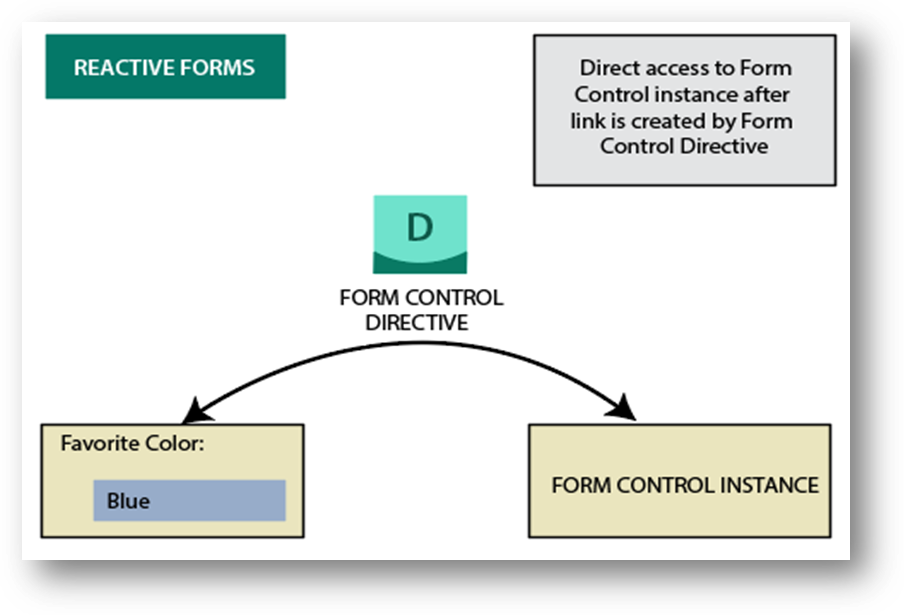
The form model is the source of truthfulness in reactive forms. The source of truth supply the value and status of the form element at a given point of time.

Here, in the above example, the form model is the form Control instance.
angular8 forms1

In reactive forms, the form model is clearly defined in the component class. After the reactive form directive links the existing FromControl instance to a specific form element in the view using a value accessor.

Form Model setup in Template-driven Forms

See the same component with an input field for a single control implemented using template-driven forms.

import { Component } from '@angular/core';
@Component({
selector: 'app-template-favorite-color',
template: `
Favorite Color:  `
})
export class FavoriteColorComponent {
favoriteColor = ''
} 

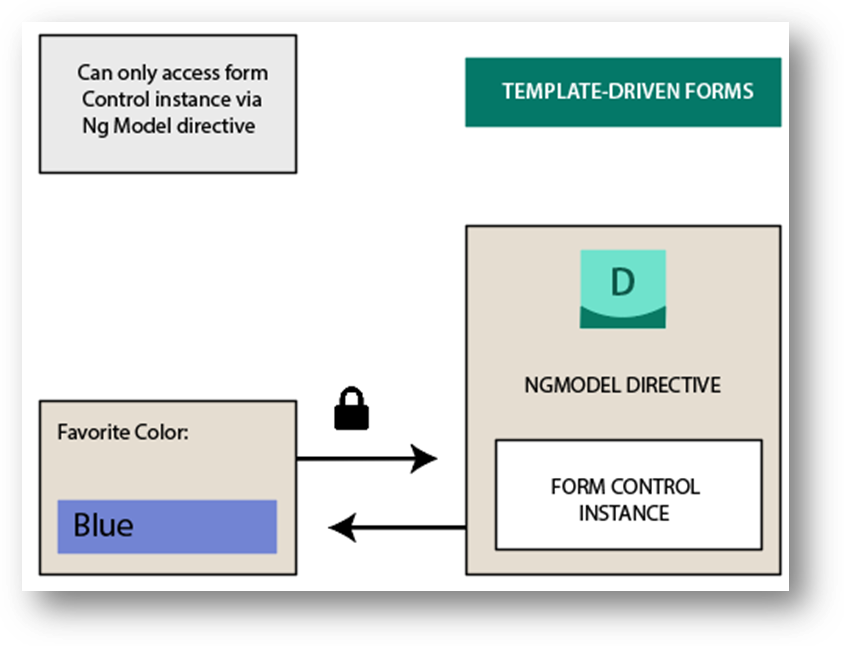
In template-driven forms, the source of the truth is template itself.
angular8 forms2

The form model abstraction promotes simplicity over the structure. The template-driven form directive NgModel creates and organizes the FormControl instance for any form element. It's less explicit, but it eliminates the direct control over the form model.


Related Topics

Angular 8 File Structure

File Structure in Angular 8: A file structure contains the files for one or more projects. A project is the set of files that comprise an application on a shareable...

3 minutes read.

String Interpolation in Angular 8

String Interpolation in Angular 8 String interpolation is a one-way data-binding technique which is used to output the data from a typescript code to HTML template. It uses the template expression. It uses the...

2 minutes read.

Difference between Angular and React

Difference between Angular and React Parameters AngularReactType Angular is a complete framework. React is a JavaScript library, and much older compared...

2 minutes read.

Angular 8 Error Fixing

We can get errors in Angular because of many causes. Let's see an example to see some specific types of errors. We have to create an app with the name "testing-app." In this app,...

4 minutes read.

Creating form in Angular 8

The angular reactive form is used to handle the user's input. We can use Angular form in the application to authorize the user to log in, to update profile, to enter information,...

2 minutes read.

Angular 8 changes and new features

The angular version number indicates the level of changes introduced by the release. The use of semantic versioning helps us understand the potential impact of updating to a new version. Angular is the...

5 minutes read.

Event Binding in Angular 8

Event binding in Angular 8 Event binding is a data-binding from an element to a component. User actions such as keystrokes, mouse movement, clicks, and touches can be bound to the component property...

1 minute read.

Dynamic components in Angular 8

Dynamic components in Angular 8 The dynamic component is one of the versatile and core concept introduced in Angular, Component template is not fixed. An application needs to load new elements...

4 minutes read.

What is AOT and JIT Compiler in Angular

A program written in a high-level language is translated into machine code or a low-level language by a piece of software called a compiler. HTML templates are the primary building...

3 minutes read.

Angular 8 App Loading

How an Angular 8 app loaded and started When we create an Angular app and run it by using ng serve command, it looks like the below screenshot. It is a simple...

3 minutes read.

Angular 8 Conclusion

Angular version 8 looks like a more accessible solution entirely focused on the modern technological trends added features. Like Ivy, route configurations use dynamic imports, builder APIs in the CLI, web worker support,...

2 minutes read.

Angular 8 Module

Angular 8 Module It is a collection of services, directives, controllers, filters, and configuration information. angular.module is used to configure the $injector. The module is a container of the different parts of an application....

6 minutes read.

Angular 8 ngIf Directive

ngIf Directive is the part of structural directives.The NgIf is the most straightforward structural Directive and comfortable to understand. The ngIf Directives is used to add and remove HTML elements according to...

2 minutes read.

Angular 8 ngClass Directive

Angular 8 ngClass Directive ngClass Directive is a type of attribute directive. Angular provided built-in directive, and it helps in adding or removing CSS classes on an HTML element. The ngClass directive allows...

2 minutes read.

Angular 8 with Bootstrap

How to install Bootstrap for Angular? Run the following Command in Command prompt. npm install–save bootstrap@3= > The @3 is essential! After that, when we use a project created with Angular CLI 6+, we will...

1 minute read.

Angular 8 Pipes

Angular 8 Pipes Pipes are a useful feature in Angular. These are the simple way to transform values in an Angular template. It takes the integers, strings, array, and dates as input separated with...

3 minutes read.

Data flow forms in Angular 8

When we are building forms in Angular, it is essential to understand how the framework handles data flowing from the user or programmatic changes. Reactive and template-driven forms follow two different strategies when...

3 minutes read.

Scalability and Validation Forms in Angular 8

Form Validation Validation is an essential part of managing any set of forms. If we are checking for required fields or querying an external API for a username. Angular 8 provides a set of...

1 minute read.

Angular 8 Components

Angular is used for building mobile and desktop web applications. The component is the basic building block of Angular. It has a selector, template, style, and other properties, and it...

4 minutes read.

Dependency Injection in Angular 8

Dependency injection (DI), is an essential application design pattern. Angular 8 has its own DI framework, which used in the design of Angular application to increase efficiency and portability. Dependencies are the services that...

7 minutes read.