
×

Ascending order in C++

In C++, the term "ascending order" refers to a specific order in which a list of elements is arranged. When a list of elements is arranged in ascending order, the elements are arranged from smallest to largest. For example, suppose the elements are integers. In that case, the list will be arranged in such a way that the smallest integer is at the beginning of the list, followed by the next smallest integer, and so on, until the largest integer is at the end of the list.

For example, the list {3, 1, 4, 2} is not in ascending order, but the list {1, 2, 3, 4} is in ascending order.

In C++, several built-in functions can be used to sort a list of elements in ascending order. The sort() function from the algorithm library is one such function that can be used to sort a list of elements in ascending order.

To sort elements in ascending order in C++, you can use the sort() function from the algorithm library. This function sorts the elements in a range (specified by a pair of iterators) in ascending order by default. Here is an example:

#include <iostream>
#include <algorithm>
#include <vector>


int main()
{
    std::vector<int> numbers = {3, 1, 4, 2};


    // Sort the elements in the vector in ascending order
    std::sort(numbers.begin(), numbers.end());


    // Print the sorted vector
    for (int x : numbers)
        std::cout << x << " ";
    std::cout << std::endl;


    return 0;
}

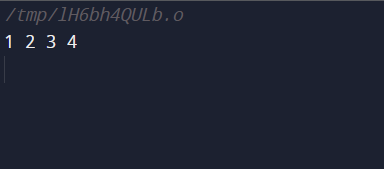
Output:
Ascending order in c++

Explanation:

The above demonstrates how to sort an array in ascending order. This program creates a vector of integers and then uses the sort() function to sort the elements in ascending order. The sorted vector is then printed to the standard output.

To sort an array in ascending order without using the sort() function from the algorithm library, you can use a simple for loop and the std::swap() function to swap the elements in the array until they are sorted in the desired order. Here is an example:

#include <iostream>
#include <algorithm>


int main()
{
    int numbers[] = {3, 1, 4, 2};
    int size = 4;


    // Use a simple for loop to sort the array in ascending order
    for (int i = 0; i < size; i++)
    {
        for (int j = i + 1; j < size; j++)
        {
            if (numbers[j] < numbers[i])
            {
                // Swap the elements if the next element is smaller
                std::swap(numbers[i], numbers[j]);
            }
        }
    }


    // Print the sorted array
    for (int i = 0; i < size; i++)
        std::cout << numbers[i] << " ";
    std::cout << std::endl;


    return 0;
}

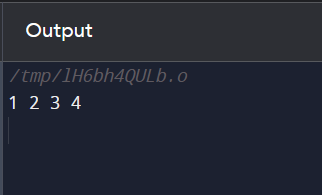
Output:
Ascending order in c++

Explanation:

This code uses a simple for loop to iterate over the elements in the array and compares each element with the next element. If the next element is smaller, the two elements are swapped using the std::swap() function. This process continues until all elements are in the correct order.

Note that this method of sorting an array is not very efficient, especially for large arrays. The sort() function from the algorithm library is a much more efficient way to sort an array in C++.

Here is another example of sorting without using any function:

#include <iostream>
#include <algorithm>
#include <vector>


int main()
{
    std::vector<int> numbers = {3, 1, 4, 2};


    // Sort the elements in the vector in ascending order
    std::sort(numbers.begin(), numbers.end());


    // Print the sorted vector
    for (int x : numbers)
        std::cout << x << " ";
    std::cout << std::endl;


    return 0;
}

Output:
Ascending order in c++

Explanation:

This program is similar to the previous example, but instead of using the std::swap() function to swap the elements in the array, it uses a temporary variable to store the value of one element before swapping it with the other element. This is a common way to swap elements in an array without using the std::swap() function.


Related Topics

What does Buffer Flush mean in C++

A buffer flush, to explain simple layman's terms, is nothing but the transfer of computer data which is being stored in a rentable temporary memory of your computer running either...

3 minutes read.

Top best IDEs for C/C++ Developers in 2024

Nothing in the current digital world is conceivable without programming. Everything needs programming, from the cell phones in our pockets to self-driving cars. Programming is also necessary for the mouse...

9 minutes read.

getline() Function and Character Array in C++

In this article, we will explore about some concepts on getline() function and character array in the most useful language C++. The getline() method in C++ is simply a standard library...

6 minutes read.

Top 5 IDEs for C++ That You Should Try Once

In the past decades, creating an application or interface from the very basic idea, the developer has to struggle a lot for it. Because an application is a combination of...

3 minutes read.

Hello World Program in C++

The steps for “Hello World” C++ program are as follows: Write a C++ code given below in an editor. Save the file with .cpp Compile the code using C++ compiler or using online...

3 minutes read.

fread() Function in C++ Programming

C++ language is used to make high-performance applications that can work efficiently, and it is one of the world's most popular languages. It is an object-oriented and high-level programming language;...

3 minutes read.

C++ Continue in Do-while loop

Continue statement: Inside the loop, the continue statement is used to control the loop. C++ utilizes the continue keyword to implement the continue statement, which transfers the program's flow at the start...

4 minutes read.

Constructor Overloading

The program contains more than one constructor in a class with the same name, and different types of arguments are called constructor overloading. Calling of constructor depends on the number and types...

2 minutes read.

How to Sort an Array in C++

What is Sorting? Sorting is a process of arranging elements in sequential order, either numerically or alphabetically. The sorting of a numerical array can be accomplished using a variety of algorithms,...

4 minutes read.

C++ Iterators

What are iterators ? Iterators are among the four foundations of the C++ Standard Template Library, also known as the STL. The memory address of the STL container classes is pointed...

15 minutes read.

gmtime() function in C/C++

C++ language is used to make high-performance applications that can work efficiently. It is one of the world's most popular languages. It is an object-oriented and high-level programming language, which...

4 minutes read.

Bits stdc++.h in C++

<bits/stdc++.h> in C++ In essence, it is a header file that contains all the standard libraries. It makes sense to use this file in programming competitions to speed up work, especially...

2 minutes read.

Lexicographically Next Permutation in C++

In this tutorial, we'll look at how to use C++ to generate the lexicographically next permutation of a string. The lexicographically next permutation is the larger permutation. "ACB," for example,...

3 minutes read.

C++ Type Casting

The type casting of variables in the C++ programming language will be covered in this section. The term "type casting" describes how software converts one data type to another. There...

9 minutes read.

Upcasting and Downcasting in C++

With the help of various examples in the C++ programming language, this section will cover Upcasting and Downcasting. Upcasting and downcasting, on the other hand, are two forms of object typecasting. Consider...

3 minutes read.

Is it fine to write void main() or main() in C/C++?

In C programming language: The default function return type in the C programming language is "int," which implies that main() will always return an integer value. In C, the void main()...

3 minutes read.

Name Mangling and extern in C++

Name Mangling and Function Overloading: Function overloading is a feature offered by C++. As long as each function accepts various parameters, we can use this to write many functions with the...

4 minutes read.

C++ String

A string is a collection of characters. C++ programming language supports both C string as well as standard C++ library string. In C++, string is an object of std::string class. C Style String The C style...

5 minutes read.

Smart pointers in C++

What are Pointers ? Pointers are often used to keep track of a variable's address. A null value can be assigned to a pointer. Pass by reference can be used to...

6 minutes read.

Principles of Object-Oriented Programming in C++

What is Object-Oriented Programming? Object-oriented programming is about creating obejcts that represent the real-world entity . In object-oriented programming, objects are created for the class. One of the main objectives of...

5 minutes read.