
×

Need of Blockchain

Blockchain is an open and decentralized network, which stores redundant data at multiple sites called nodes (computers). Its properties, such as immutability, distributed control, highly secured encrypted blocks, and anonymity, make it ideal for solving many practical real-time problems. Considering all the properties of Blockchain, this article discusses its need for providing technical solution of problems.

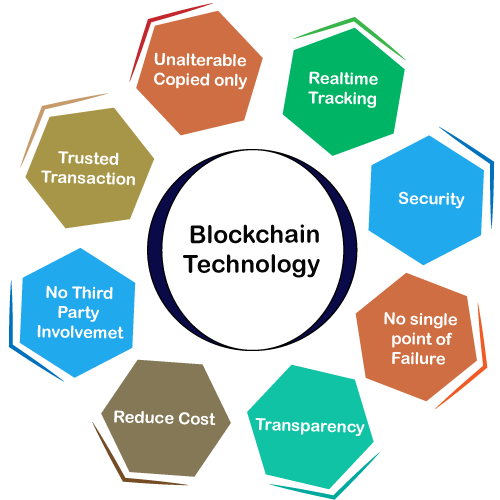
Blockchain is undoubtedly a smart invention. It comes with trust, decentralized network, and transparency, let's discuss some beneficial traits of Blockchain, which escalate its need for implementation in the coming future-

  • Provides History of Activities

Blockchain maintains a record of all previous transactions and changes, which have been made from the beginning of its creation, along with the most recently updated status of data. In other words, Blockchain not only stores a snapshot of the most recent updates but also stores the history of all operations on data for reference.

  • No Achilles Heel

The decentralized nature of the blockchain network makes it robust against any sort of attack. There exist no central vulnerable site to target and bring down the whole network. The distributed and dispersed nature of control amongst the nodes makes it very secure to use.

  • No  Need of Central Administrator

Each node in a blockchain network holds the most recently updated replica of records. Since every node holds the power to control the network equally, there is no need to have any central authority to look over and administrate work. This saves the cost of infrastructure required to its set up.

Why do we need blockchain?
Need of Blockchain
  1. To record secure transactions between numerous partners

When it comes to record simple transactions between two parties, then the conventional database system can be efficiently used. However, for more complex transactions involving multiple mistrusting partners who want to interact and make changes in the data, Blockchain must be used. It yields satisfactory results to overcome tailback and congestion problems to simplify connections.

  • To eliminate the role of a middleman

For instance, many sections of hospitality such as flight and accommodation providers have to deal with their guests through a centralized application or website playing the role of a middleman such as Trivago, Makemytrip, and Expedia, etc. As believed by many travel companies, the implementation of Blockchain would help to cut the role of middleman and help to establish direct interactions and deals with customers and tourists.

  • To manage and assure the safety of digital relationships 

Taking another example, for securing records of property or land rights and any other such assets, one needs a transparent and durable system in order to ensure this data.

Smart contracts are on such application of Blockchain, which expedite such digital connections/ transactions. Automated payments of requirement fulfillment and digital history of all records are some critical features of any smart contract.

  • A tradeoff between transparency and privacy

A completely transparent system would commonly provide no privacy and make information available to anyone and everyone, making it susceptible to attacks. Similarly, a fully private system would provide no transparency. However, Blockchain is one such technology which provides a midway to balance both pellucidity and privacy. It does so by making all the transactions available for verification by the nodes in the network and, at the same time, using techniques to encrypt the block in chronological relation cryptographically.

  • To maintain data integrity.

It is very important to secure the data from any unauthorized modifications. On a digital platform with extensive participation of nodes, in a distributed manner, the data is vulnerable to threats of being tempered or corrupted during transmission. Blockchain provides the feature of public verifiability to each of its nodes. Any harm to the integrity of the data can be reported via any node part of the network. This helps to maintain the integrity of data over a dispersed blockchain network.

  • Autonomous system

Unlike customary organizations or companies, blockchain has no central body of governance or management. One such example is the Decentralized Autonomous Organization (DAO), which is defined by a set of rules mentioned in a smart contract that establishes the degree of its usage and evolution. DAO may have many investors who vote upon how to invest the funds of DAO. Since the investors have a feeling of mistrust amongst them, DAO is best implemented using permissionless Blockchain.


Related Topics

Smart Contracts

What is a Smart Contract? A smart contract is a self-executing computer program. It is a decentralized computation program, which directly controls the transfer of digital assets between different parties under certain pre-defined...

5 minutes read.

Blockchain Merkle Tree

The Merkle tree is an essential component of Blockchain technology. It is a mathematical data structure composed of hash of various data blocks that serves as an overview of all...

4 minutes read.

How to Block Hashes Work in Blockchain

Working of Block Hashes in Blockchain It is a concept for storing data digitally. It will be available to everyone (publicly). Whoever wants to see it will be able to see...

4 minutes read.

Getting Started with Bitcoin

The goal of this part is to show you how to get started with Bitcoin in a simple way. 1. Get to Know Bitcoin Bitcoin has certain unusual characteristics. It behaves similarly...

4 minutes read.

Bitcoin Forks and SegWit

We will learn about Bitcoin forks and Segregated Witness in this section (SegWit). What Is the Definition of a Segregated Witness (SegWit)? Segregated Witness (SegWit) is a Bitcoin transaction format modification. Its...

3 minutes read.

Key Areas of Blockchain

As we know that Blockchain is the backbone of the technology of digital cryptocurrency (Bitcoin). The Blockchain contains all transaction records which are stored in a distributed database; it even...

3 minutes read.

Data Encryption Standards

The Data Encryption Standards was introduced by the National Institute of Standards and Technology. A Feistel Cipher is implemented in DES. The Data Encryption Standards was developed by the company...

3 minutes read.

Decentralized Voting System using Blockchain

In the era of Industry 4.0, Blockchain is a technology that is fast gaining traction. It is widely utilized in supply chain management systems, healthcare, payments, business, IoT, voting systems,...

3 minutes read.

Converting Bitcoins to Fiat Currency

Fiat money is a legal tender currency issued by a government for use in its governed areas. Fiat money is money that has value only due to government regulation or...

4 minutes read.

Blockchain Hash Function

A hash function is a type of function which takes input in string format (alphabets, media files, numbers) of any length provided by the users and converts it to a...

3 minutes read.

Top Blockchain Project Ideas for Beginners

Blockchain is a distributed, unchangeable ledger that makes it easier to record transactions and track assets within a business network. An asset can be either physical (a house, car, money,...

6 minutes read.

Key Concepts in Bitcoin

There are many countries in this world and each country uses their currency for trading purpose. Some of them use the dollar, pound, euro, yen & rupee etc. These currencies...

3 minutes read.

Cryptography in Blockchain

What is Cryptography? Cryptography is a method for developing codes that prevent third parties from viewing private data. It helps in protecting data and information by using codes, such that it can only be...

4 minutes read.

Blockchain Block Hashing

Blockchain is the main technology used for digital cryptocurrencies like Bitcoin. Blockchain consists of a database that has all the records of digital events that have taken place or all...

3 minutes read.

Blockchain Pow

Blockchain Pow is an acronym that stamds for Blockchain sProof of work. Pow (Proof of work) is an original agreement (consensus) algorithm in the Blockchain network. This algorithm is generally...

3 minutes read.

Elliptic curve in cryptography

What is Elliptical Curve Cryptography (ECC)? Elliptic Curve Cryptography (ECC) is public key cryptography based on elliptic curve theory. It can be used to create smaller, faster and more efficient public...

4 minutes read.

Blockchain Double Spending

When the money is spent twice, we call it double-spending. We know any transaction can occur in two different ways 1st way is offline mode and 2nd way is online...

3 minutes read.

Blockchain Versions

Blockchain Versions Blockchain technology has gained popularity because it offers decentralized and transparent storage to record transactions and data. Generally  Blockchain relates with the bitcoin and cryptocurrency. Since 2009, Blockchain technology has been...

2 minutes read.

Project Ideas on Blockchain for Professionals

We have moved on from the days when Blockchain was solely employed in the context of cryptocurrencies. It is currently used in a broader range of applications, and it will continue...

4 minutes read.

Who sets the Bitcoin Price

The function of Bitcoin is very similar to a commodity. Bitcoin's price is decided by the market where it is traded. To put it another way, how much someone is...

4 minutes read.