
×

Git Hooks

Git Hooks Overview

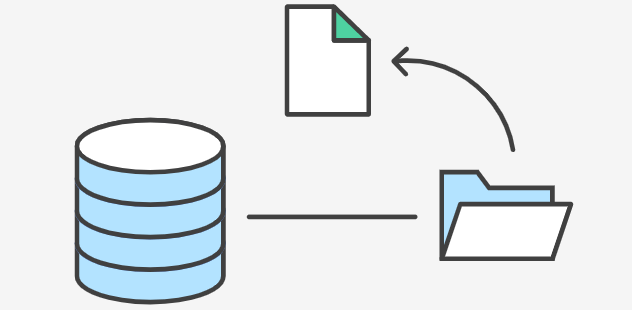
Just like other version control systems, Git has its way to deliver customized scripts whenever some important activity occurs. The hooks act just like the triggers or catalysts that get activated whenever an important event is invoked. However, hooks are mostly used whenever you want to customize Git's internal behavior in a way you want. It automatically fires-off actions considering key points in the life cycle of development.
Git Hooks

Nature of Hooks

Hooks in Git are the simple scripts that are executed whenever a special event occurs in your repository. This nature makes it easier for the developers to install the system and configure it.

Unlike the other version control systems, Git Hooks consist of two groups namely: client-side and server-side. Client-side hooks are invoked whenever you try to merge or commit the files in the repository while server-side hooks occur when you run network operations like pushing commits, pulling, etc. You can use the hooks for all sorts of reasons.

Installing a Hook

By default, hooks in Git are stored in sub-directories. In the majority of projects, hooks are stored in the directory like the format .git/hooks. While initializing the Git repository with the init command, Git fires-off the sample scripts. Some of which are used by self and some are used to input values in each script. All these sample scripts are written in bash scripts with some Perl-coded automation.

You can also write the scripts in any language. If you think of using the hooks in the bundle and create sample scripts, you will have to rename them sample scripts ending with the extension .sample.

Therefore, to use a hook script, you will need to put a file in the sub-directory in Git and name it with proper convention without any extension. Doing so will cover the hook filenames appropriately and in the forward point, it will be easier to call them.

Scope of Hooks

Hooks in general, stay local in any repository. They cannot be copied to new repositories whenever you try to clone them. This limitation is quite absurd because it can be easily altered by any individual who has access to the repository.

Another scope of limitation is that while configuring hooks amongst a team of developers, you need to make sure hooks stay updated amongst the other team members. Also, you cannot force other members to create commits every time in a different way. They may not do so.

Lastly, the hooks are difficult to manage and seem pretty complex because the directory .git/hooks are not under version control and are not cloned and integrated with the rest of the project's files. As suggested by most developers, an efficient solution is to store your hooks under the project's leading directory primarily. It will let you configure and modify them just like version-controlled files with other files present in your project. To do this, you create a symlink in the .git/hooks directory, or you can copy and paste them whenever you update your hooks.

Types of Hooks

Server-side hooks

Server-side hooks, as already discussed, behave as local ones except for the fact that their residence lies in the central or a public repository delivered and managed by the developer. When attached to a central or public repository, Server-side hooks can efficiently serve to enforce and reject specific commits in their policy.

There are although various server-side hooks but we’ll be discussing about the main types. They are:

  1. Pre-receive: It gets executed whenever you try to push your commit. It usually resides in the destination repository and not in your local originating repository.
  • Update: It executes in the three-way method i.e. first the reference name is updated, then the old reference name is updated and then the new reference name is updated.
  • Post-receive: It executes after you push your commits thereby enforcing the notification to appear post committing with no parameters in hand. It simply sends the information via pre-receive via standard input.

Client-side hooks

Client-side hooks or local hooks have the limitation of influencing only the repository in which they reside. As already discussed, local hooks are only able to alter their hooks so they can't be used to invoke the commit policies a developer might have established. These guidelines are needed to have adhered developers who use them.

In general, local hooks comprise 6 types. They are:

  1. Pre-Commit
  • prepare-commit-msg
  • commit-msg
  • post-commit
  • post-checkout
  • pre-rebase

The first 4 types are primarily used to plug-in the complete life cycle of the project undertaken.

The remaining 2 types are used for safety checks and other operations when integrated with git checkout and git rebase command respectively.


Related Topics

C Switch Statements

Switch-case statement comes under the Selection control statement; there are four types of Control statements Decision-making statements (if, if-else)Selection statements (Switch-case)Iteration statements (for, while, do-while)Jump statements (break, continue, goto) If we want...

4 minutes read.

Types of Pointers in C

Pointers in C A pointer is a variable and this variable contains the address of another variable, i.e it’s a variable which has the address of another variable as its value....

4 minutes read.

Sum of N numbers in C using For loop

Before we move on the program of sum of N numbers, first we have to know about the For Loop statement. The syntax of ‘for’ loop in C programming language is...

3 minutes read.

Diffie-Hellman Algorithm in C

Background: A method of public-key encryption known as elliptic curve cryptography (ECC) is based on the algebraic structure of elliptic curves over finite fields. To ensure equal security, ECC encryption requires fewer...

4 minutes read.

Compound Interest Program in C

Interest on loans and deposits is compound interest. This is the most commonly used concept in everyday life. Compound interest on an amount is based on principal and interest earned...

3 minutes read.

Modulus on Negative Numbers in C

In this tutorial, we will explore some examples of modulus on negative number. What is Modulus of Negative number? By omitting the minus sign, one can determine the modulus of a negative...

3 minutes read.

Booleans in C

Introduction to Boolean With all the complexities of programming, it can take time to understand the basics. One concept, in particular, that confuses many beginners is the use of Booleans in...

6 minutes read.

What is Linked List in C

Linked list Similar to an array, a linked list is a linear data structure that stores a chain of nodes with two fields of memory in each node. Where first memory...

7 minutes read.

Bar3d() function in C Graphics

The bar3d function is used to create a 2-dimensional filled-in rectangular bar. We can also create three-dimensional shapes in C using helpful function. The first step in creating this 3D...

3 minutes read.

Socket Programming in C

Socket programming is a process that connects the two or more nodes on a networking communication with respective to each other. One of the sockets that determines the socket (I.e.,...

5 minutes read.

How to include graphics.h in C?

How to include graphics.h in code blocks? Graphics .h is a header that allows drawing lines, rectangles, ovals, arcs, polygons, pictures, and strings on a graphical window by giving access to...

6 minutes read.

What is String Comparison in C

String comparison is the process of comparing two strings (sequences of characters) to determine if they are equal, or if one is greater or less than the other. The comparison...

4 minutes read.

Built-in functions in C

The function is a set of instructions and statements enclosed in the "{}" delimiter. In c, there are two types of functions. Pre-define functions/ Built-in functionsUser define function. Built-in functions in C:- These...

8 minutes read.

DSA Program in C

How is a Data Structure Implemented? The foundational terms of a data structure are the following terms. Data may be arranged using data structures to make it easier to use. Each data...

20 minutes read.

Kruskal algorithm in C

Given a weighted graph, Kruskal's algorithm generates a spanning tree with the lowest possible weights. Start by creating an edge list for the given graph, including the weights. Sort the...

3 minutes read.

Loop Questions in C

Question 1: What is For loop syntax? Ans: The syntax that has been used for the ‘for’ loop in C programming language is: for (initialization statement /*for providing a value to variables*/; test...

19 minutes read.

gets() function in C

gets() is a pre-define or built-in function present in the stdio.h header file. stdio stands for standard input and output. gets() function is used to read a stream and store...

4 minutes read.

clrscr in C

clrscr function in C clrscr stands for: clr = clear scr= screen When the clrscr() function is called in a program everything currently displayed in the console(output of previous programs, output of current program,...

3 minutes read.

How to use floor() function in C

Introduction: The floor() used as a function in the C programming language. This function uses to return the largest or most significant integer value. The integer value is smaller than...

3 minutes read.

Random function in C

Random function in C In the C programming language, the rand() is a function used for Pseudo Random Number Generator (PRNG). The random number generated by the rand() function is not...

4 minutes read.