Difference between Perl and Python
Control and presently utilized for a great many undertakings, including framework organization, web improvement, network programming, and GUI improvement, and the sky is the limit from there.
About Perl?
- Perl is a consistent, cross-stage programming language.
- However, Perl isn't formally an abbreviation, yet a couple of individuals involved it as Practical Extraction and Report Language.
- It is utilized for strategic activities in general society and confidential areas.
- Perl is Open-Source programming, approved under its Artistic License or the GNU General Public License (GPL).
- Perl was made by Larry Wall.
- Perl 1.0 was delivered to Usenet's alt.comp.sources in 1987.
- At the hour of forming this informative activity, the latest variation of Perl was 5.16.2.
- Perl is kept in the Oxford English Dictionary.
Perl is Interpreted
Perl is a deciphered language, and that implies that your code can be run with no guarantees, without a gathering stage that makes a non-convenient executable program. Conventional compilers translate programmes into machine language. When you start a Perl programme, it is first compiled into byte code, which is subsequently converted (while the programme runs) into machine guidelines. As a result, it is not exactly equal to shells or Tcl, which can be totally read without the use of a transitional representation. It dislikes most versions of C or C++ that are simply included in a subordinate machine configuration. It is somewhere in the centre, amid Python, awk, Emacs.etc files.
Perl Features:
- Perl takes the best elements from different dialects, like C, awk, sed, sh, and BASIC, among others.
- Perls data set reconciliation interface DBI upholds outsider data sets including Oracle, Sybase, Postgres, MySQL and others.
- Perl works with HTML, XML, and other increased dialects.
- Perl upholds Unicode.
- Perl is Y2K consistent.
- Perl upholds both procedural and object-situated programming.
- Perl interacts with outer C/C++ libraries through XS or SWIG.
- Perl is extensible. The Comprehensive Perl Archive Network provides access to over 20,000 external modules (CPAN).
- The Perl mediator can be implanted into different frameworks.
Python Features:
- It is straightforward, learns, and ace.
- Investigating Python code is simple as the code is straightforward.
- Python code can be executed on a variety of operating systems and hardware.
- Python coding permits complex coding depending on the situation in Robotics, Artificial Intelligence, and so forth.
- Python gives a great deal of pre-fabricated libraries, making coding more straightforward.
- Data set coordination with MySQL, Oracle, and so forth is conceivable in Python.
- It is feasible to incorporate Python with other programming dialects like C, C++, Java, and so on.
- It gives a programmed trash assortment.
Advantages of Perl:
- It is more straightforward to code as there is a compelling reason need to stress over whitespaces.
- It permits the client to compose similar code in various styles.
- It has inherent capabilities to deal with activities at the Operating System level.
- It permits simple, recognizable proof of factors because of the utilization of images like '@', '%' and so on before them.
- Tasks connected with Input/Output are a lot quicker utilizing Perl.
- Report age should be possible effectively utilizing Perl.
- It has strong String Comparison choices that guide recorded as a hard copy fast and shortcode.
Advantages of Python:
- It is not difficult to learn and comprehend because of its basic sentence structure.
- Each line of code doesn't need finishing with a ';' in view of the utilization of whitespaces and space.
- It very well may be utilized to make enormous applications and sites without any problem.
- It has noteworthy help from libraries because which its areas of purpose are immense - as in Machine Learning, Big Data, Web Programming, Desktop Applications, and so forth.
- Bigger projects can be composed with fewer code lines.
Perl Code Example:
//For the addition of two numbers
$x = 20;
$y = 20;
$sum = $x + $y;
print($sum);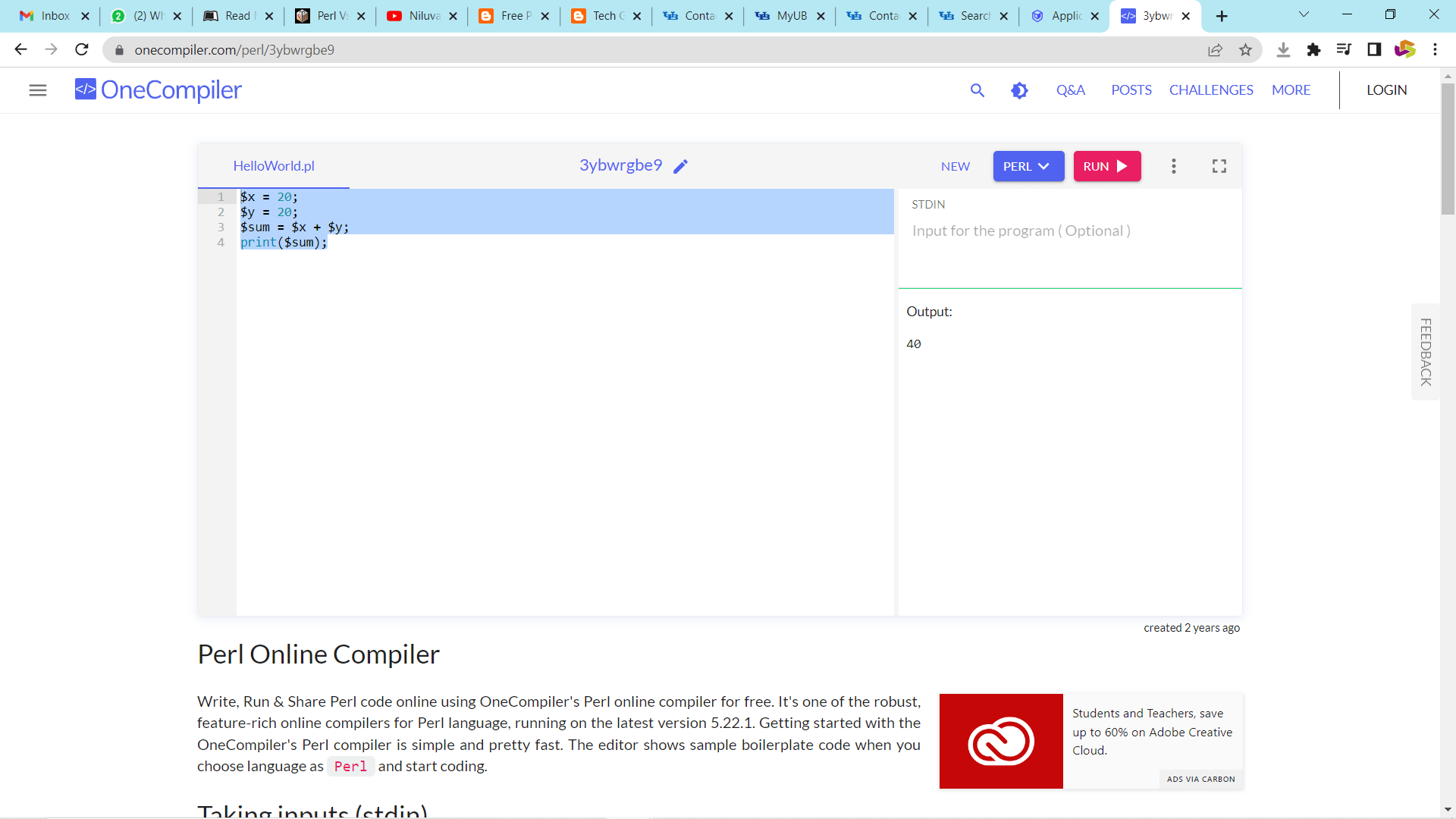
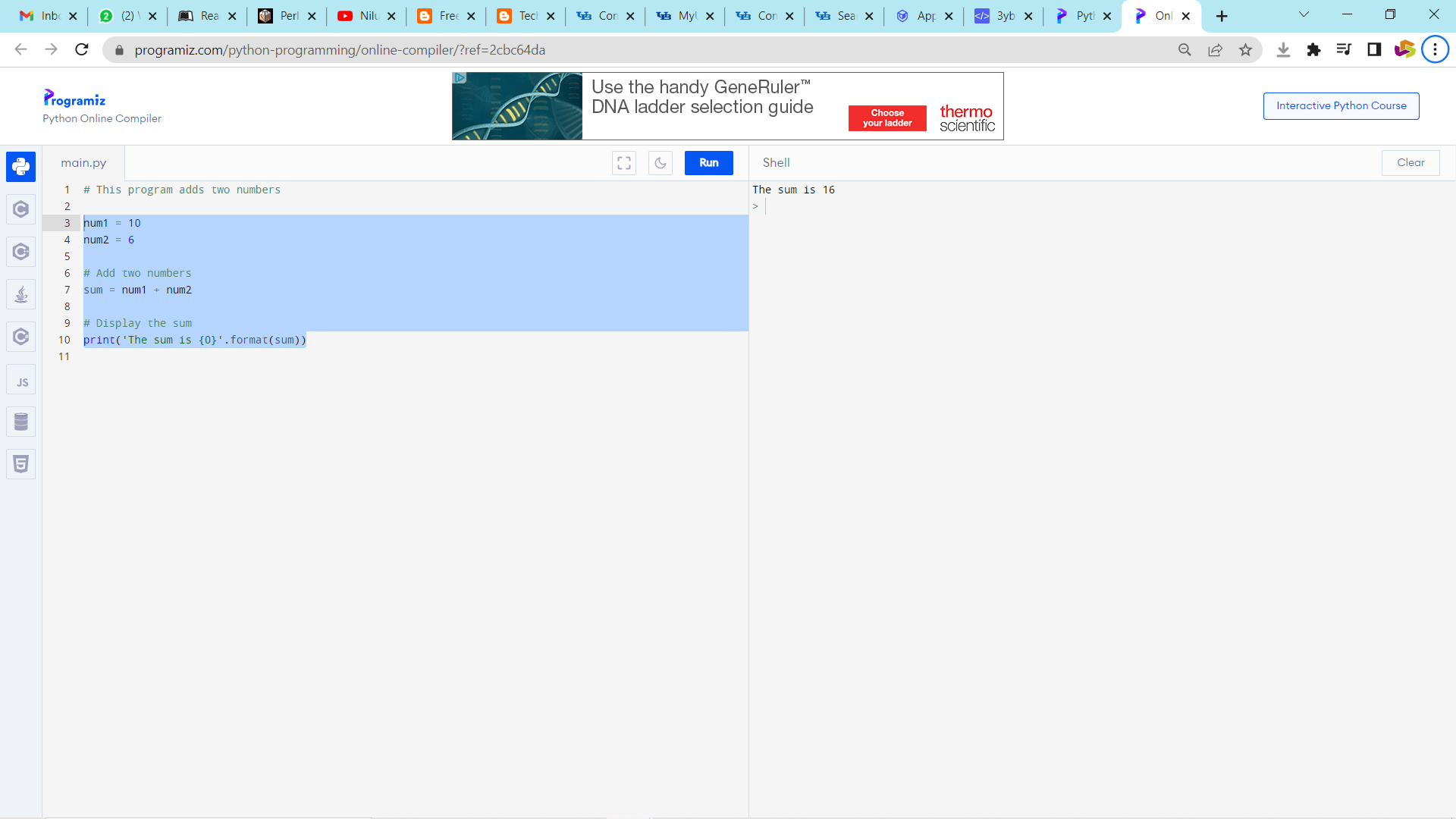
Python Code Example
//For the addition of two numbers
num1 = 10
num2 = 6
# Add two numbers
sum = num1 + num2
# Display the sum
print('The sum is {0}'.format(sum))
Output:
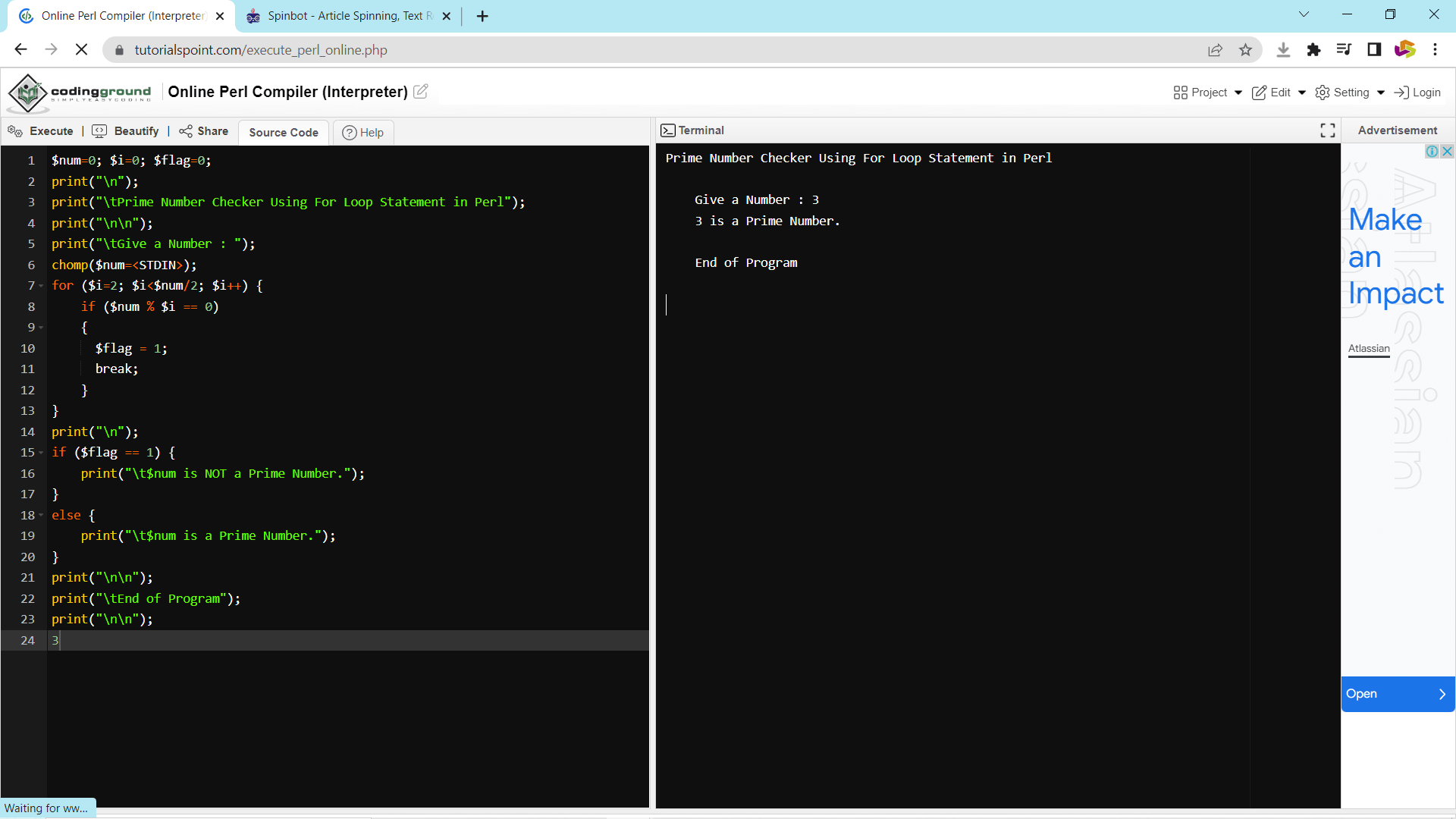
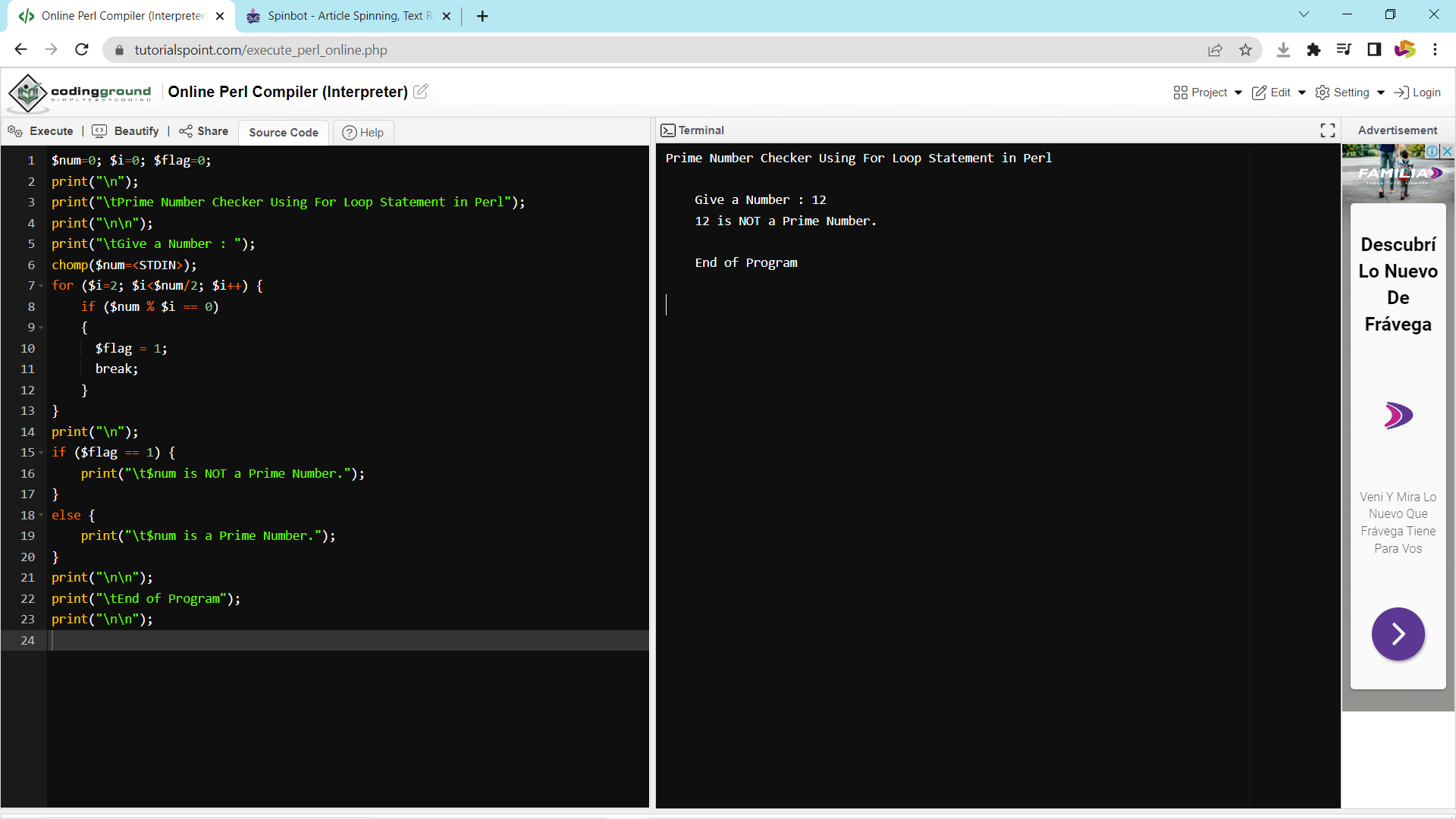
Perl code to check whether the given number is prime or not
$num=0; $i=0; $flag=0;
print("\n");
print("\tPrime Number Checker Using For Loop Statement in Perl");
print("\n\n");
print("\tGive a Number : ");
chomp($num=<STDIN>);
for ($i=2; $i<$num/2; $i++) {
    if ($num % $i == 0)
    {
      $flag = 1;
      break;
    }
}
print("\n");
if ($flag == 1) {
    print("\t$num is NOT a Prime Number.");
}
else {
    print("\t$num is a Prime Number.");
}
print("\n\n");
print("\tEnd of Program");
print("\n\n");
Output
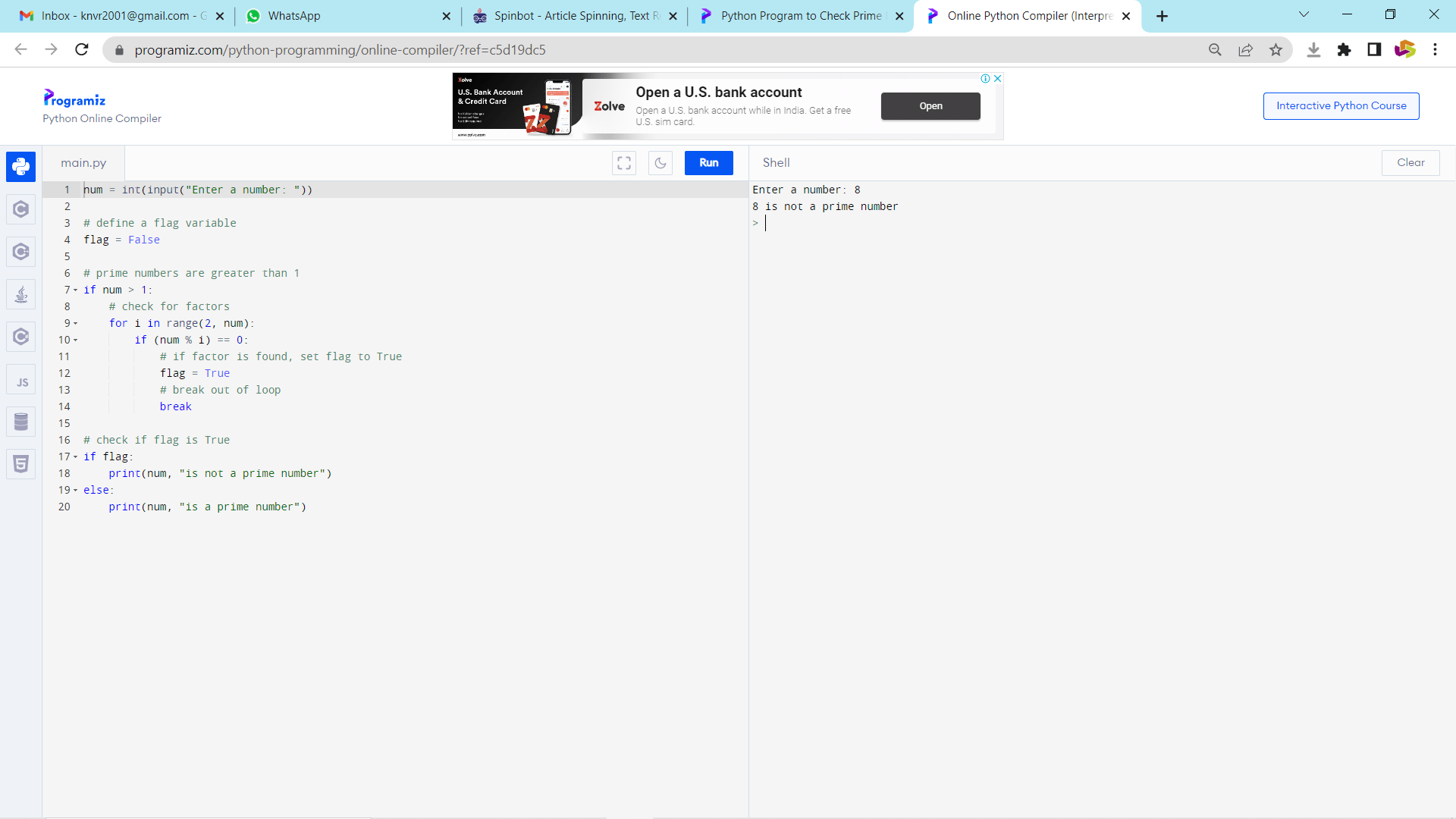
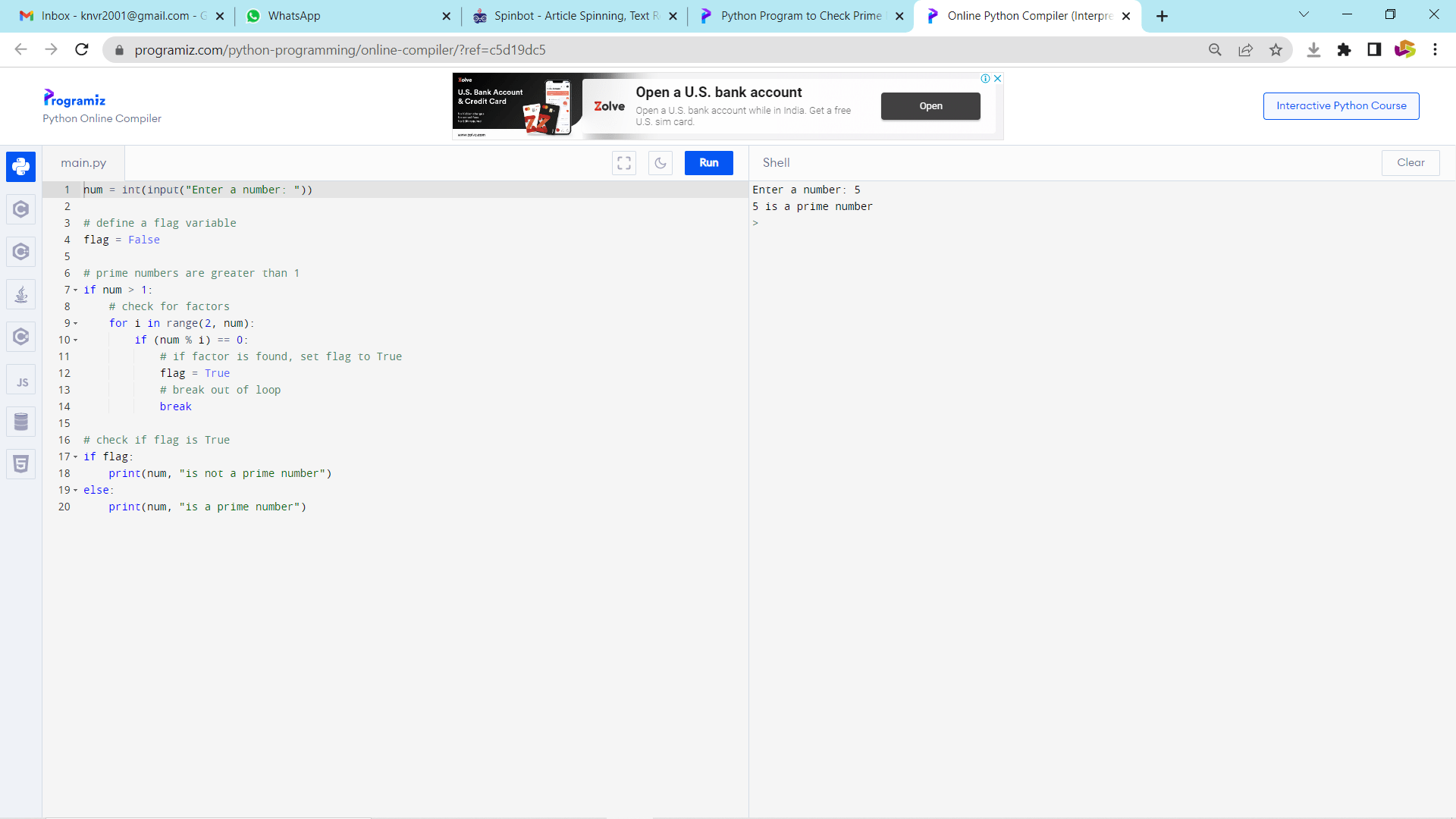
Python Program to check if a number is prime or not
n = int(input("Enter a number: "))
# define a flag variable
flag = False
# prime numbers are greater than 1
if n > 1:
    # check for factors
    for i in range(2, n):
        if (n % i) == 0:
            # if factor is found, set a flag to True
            flag = True
            # break out of loop
            break
# check if flag is True
if flag:
    print(n, "is not a prime number")
else:
    print(n, "is a prime number")
Output