
How to Identify problems in the Windows Device Manager?
When you run the Device Manager, a screen shown in the example display below. Next to each gadget category, arrows are pointing to the right. No other devices or Unknown devices should be mentioned, and all categories should have Plus signs. However, if issues arise, you might be making one or more than one of the errors listed below.
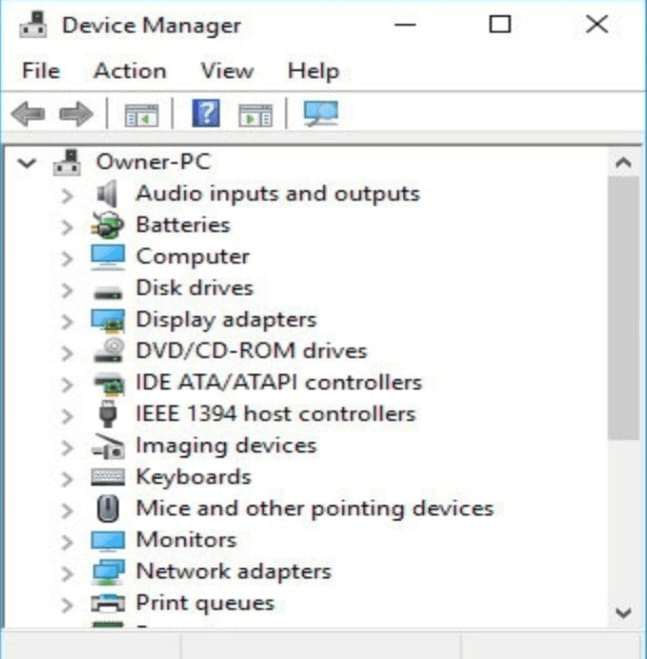
Note: If you have a problem using the Device Manager, Windows may have corrupt files. To resolve this problem, it might be essential to conduct the Windows repair procedure using the Windows CD or DVD.
1) Exclamation mark or other devices
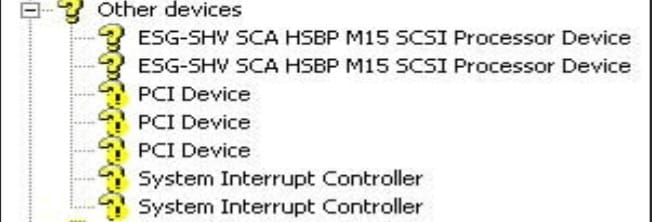
Under Other devices, if a gadget is marked with a yellow circle and an exclamation point, other hardware conflicts with it. It could also mean that the device's drivers must be incorrectly installed.
An error code is displayed when you double-click and open the problematic device.
A list of Device Manager error codes is provided below, along with suggestions for how to fix each one. To find your problem code, scroll through the entire list.
View the trouble codes in the Device Manager
Follow the instructions below to view any device's status or error code.
- Start the Device Manager program.
- Double-click the apparatus, and in the apparatus, you will get options to select code.
What to do with devices such as exclamation points or others?
You may remove any devices marked with an exclamation point and any Other devices from Device Manager by selecting them and hitting the delete key on the keyboard. After uninstalling everyone, restart the machine to allow Windows to re-check the devices.
Windows cannot install the devices if the Device Manager does not change even after restarting the computer because it lacks the necessary driver support. Make use of the hardware's original installation DVD or download the most recent drivers for that particular device.
Select the equipment
Before looking for drivers or software, know the device's maker and model. On the website of the manufacturer, you can find the software or drivers for an internal hardware component of an OEM computer. They might also be on a system-supplied CD or DVD.
2) Red "x"
The device has been deleted or disabled, or Windows cannot find it.
How to handle red X
Double-click the device marked with a red x if you want to enable it. At the bottom of the General tab, click the Device usage drop-down box next to "Do not use this device (disabled)," then select "Use this device (enabled)."
If this isn't an option or it's already enabled, select the device in Device Manager and remove it using the delete key. Allow Windows to re-check the device after a restart of the computer.
Windows cannot install the devices if the Device Manager does not change even after restarting the computer because it lacks the necessary driver support. You must use the original installation disc that was included with the hardware or download the most recent drivers for that particular device.
3) Down arrow
When a little down arrow is seen next to a device in Windows Vista, and later, it means the device is disabled.
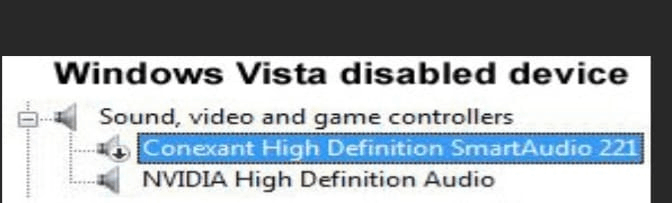
Use of the down arrow
Double-click the device, select the Driver tab and then press the Enable button to fix the problem. If prompted, restart the computer after it has been activated.
Hardware not present or unknown device
Hardware that's missing:
The computer does not identify the device if you cannot install it and do not see it listed under "Other devices" in Device Manager. Windows should list the device under Other or Unknown devices even if it lacks the necessary driver support.
Try shutting down the computer, unplugging and replugging the hardware, and restarting it. If Windows can still not recognize the device, it is either defective or incompatible with your version of Windows.
4) Unknown device
Devices recognized but displayed as Unknown devices are those for which Windows lacks the necessary driver support.
When you haven't installed anything recently and are unsure of what the computer's unknown device might be, it can be challenging to identify it.
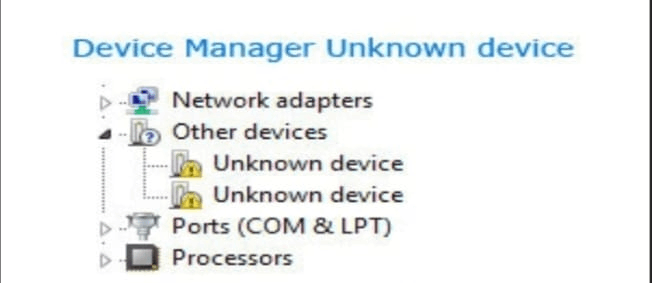
You can have more than one Unknown device in the machine if you recently performed several Windows reinstallations. The majority, if not all, Unknown devices should be resolved by installing the computer's chipset drivers from a CD or Download. Additionally, following the setup instructions on your driver CD might fix many issues with Unknown devices.
Run the setup or download the drivers from the supplied CD if you're trying to install a new device on your computer. If you don't have a driver's disc, you can download the drivers from the manufacturer's website.
How to identify an unknown PCI card
How to identify an unidentified PCI card is explained on this page. The instructions below should be followed if you are using Microsoft Windows and have an In Device Manager; choose "Unknown device" or "Unknown PCI device."
users of Microsoft Windows
Users of Microsoft Windows can check the registry to find out who made it or what kind of PCI device was installed in their machine. Follow the procedures below to accomplish this. Skip to the next section if you want to keep the registry and would rather use a different tool.
Through the System Information
- Launch the MSINFO32 (Windows System Information) utility.
- To extend the computer's available components, click Components.
- Select Problem Devices, then look for the PnP ID of the device you want to pinpoint.
hardware remedy
The next best option is to inspect the card if the software cannot identify the PCI card. The card's maker and model number are typically printed there. Look for an alternative identifier on the card, for example, an FCC identification number, if neither the model nor the manufacturer is mentioned. Visit our FCC definition page for more details regarding FCC numbers.
How to Fix Corrupt Drivers on Windows
Your PC may crash if your Windows drivers are corrupt. Here are a few solutions to address them before the subsequent crash occurs.
Are you having problems with connectivity, audio, blue screens, or even DRIVER CORRUPTED EXPOOL errors? Outdated, damaged, missing, or corrupt Windows drivers can cause various computer issues. Your drivers most likely have one or more faulty files.
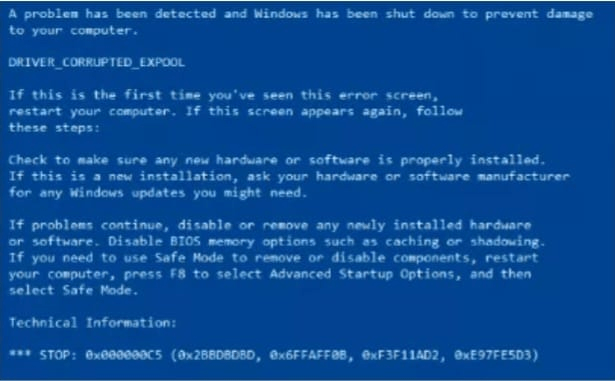
Unfortunately, this may also result in the device it controls losing functionality or crashing. Therefore, to keep your computer from breaking down, it's essential to fix a faulty driver as soon as you see it. Here are a few techniques for Windows corrupt driver repair.
This means that the system is attempting to access invalid memory at an abnormally high process IRQL and that the driver has become incompatible with the operating system.
The following are some potential solutions to the DRIVER CORRUPTED EXPOOL Error.
EXPOOL error due to corrupted driver
1. System Restore
To return your PC to a previously established stable condition, use System Restore.
2. Run Blue Screen Troubleshooter
Run the Troubleshooter for the Blue Screen of Death. The built-in Troubleshooter automatically resolves BSODs.
3. Uninstall Faulty Drivers
To begin, concurrently press the WINKEY + R keys to enter the Run box, then type devmgmt. msc and hit/click Enter.
This starts with the Device Manager. If any of your computer's drivers are broken, the driver's icon will be highlighted in yellow.
Uninstall the drivers with yellow exclamation points by right-clicking on them.
After removing the driver, restart your computer; the driver will be reinstalled.
4. Reset Windows
You can use Windows 10's Reset This PC function.
You might also use Microsoft's Refresh Windows Tool.
5. How to Check If Bios Is Corrupted
This procedure is not advised since the BIOS is a delicate computer area, and you should avoid it if you are unfamiliar with it.
If you choose this option, you should use extreme caution while modifying the BIOS or anything else.
Suppose you opt to proceed with the BIOS upgrade. You may do this by pressing the WINKEY + R keys simultaneously, which will bring up the Run box.
Enter the command msinfo32. This command will display the System Information window. At the bottom, you'll notice a search area; type BIOS Version into it and hit Enter.
The version and developer of the BIOS installed on your machine will then be shown.
Afterward, go to the manufacturer's website and download your computer's most recent version of the BIOS.
Keep your laptop plugged in until the BIOS update has been fully completed.
DBL-Click on the downloaded file to install the updated BIOS version. Once finished, restart your computer for the modifications to take effect.
6. Update Device Drivers
Ensure that the most recent device drivers are loaded on your computer.