
Third Generation of Computer
The period of the third generation was from 1965 – 1971. The integrated circuits are used in the computers of the third generation. The transistors are not used in these computers. A single integrated circuit has many transistors, registers, and capacitors grown on a single chip of silicon. The integrated circuits (ICs) was developed by the "Jack Killby.
This invention makes computers smaller in size, reliable, and efficient. The remote processing, time-sharing, and multiprogramming operating systems were used in this generation. The integrated circuits were small in size, less power consuming and less expensive than transistors which are used in the previous generation of computer. The high-level languages were improved in these type of computers.
The computer of this generation created large capacity magnetic disks and tapes and large magnetic core based on random access memory. The FORTRAN IV and optimizing FORTRAN compilers were developed in this computer generation. The computers of this generation reduced the size, price, and use of electricity.
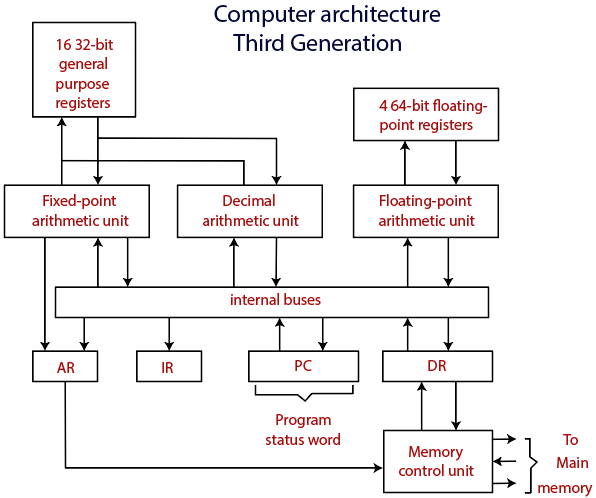
Fig: Computer architecture of the third generation.
The transistors were reduced in size and placed on silicon chips, called semiconductors. These are capable of increasing the speed and efficiency of the computers of the third generation. Users can interact with keyboards, monitors, and interface with an operating system in the third generation of computers. The integrated circuit was a single component that contains the number of transistors.
Features of the third generation
- The integrated circuits (ICs) are used in the computer of this generation.
- These computers are more reliable as compare to previous generations.
- These are small in size.
- The computer of the third generation supports the high-level language.
- These consumed lesser electricity.
- The AC is also required in this generation of computer.
- The maintenance is not good in the third generation of computer.
- The computers of this generation are faster in speed.
- These type of computers generate less heat
- These are very costly computers.
Some computers of the third generation which are given below:
- IBM-360 series.
- Honeywell-6000 series.
- PDP (personal data processor).
- IBM 370/168.
- TDC - 316.
- PDP-8.
- PDP-11.
- ICL2900.
- IBM 370.
IBM 360 series
The IBM 360 computer system is the family of mainframe computers. IBM invented it on April 7, 1964. These computers are used for both commercial and scientific purpose. These are the most expensive computer systems, which used microcode to implement the instructions.
IBM initially announced the series of six computers and forty common peripheral devices. The large 360 models have up to 8 MB of memory. The IBM 360 was the successful computer in the market, which allow the customers to purchase a smaller system with various kinds of knowledge.
All computers of the IBM 360 series used the same instruction set. The IBM delivered fourteen models of this series of computer, includes a rare one-off model for NASA. There was a least expensive model that was model 20 with 4096 bytes of core memory.
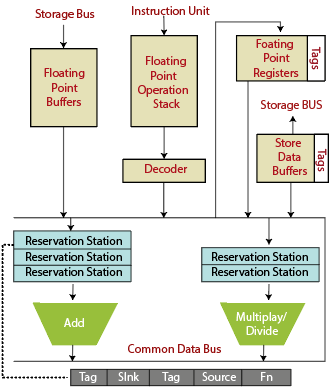
Fig: Model diagram of IBM 360 computer series.
Honeywell 6000 series
The Honeywell 6000 computer series were the versions of general electric’s 600 series mainframe computers, manufactured by Honeywell International, from 1970 to 1989. The Honeywell 6000 used various operating systems such as GCOS, Multics, and CP-6, etc.
Different types of model exist in this series, and those models were the 6070, 6060, 6050, 6040, 6030. The even number models include the enhanced instruction set feature, which added decimal arithmetic and storage to storage operations. The CPU of these computers operated on 32-bit words. The Honeywell 6000 series systems were said "memory oriented." The memory module contained 128k words. One system can support one or two memory modules for a maximum of 256k words. The memory protection and relocation have used the base and bound register in the processor.
PDP-8 Computer
The PDP-8 is the 12-bit minicomputer. This computer was developed on 22 March 1965 by digital equipment corporation.
It was commercially successful minicomputer. This computer has a smaller instruction set, which is an expanded version of the PDP-5 instruction set.
The earliest PDP-8 model, informally known as “straight-8”. These computers are available in desktop and rack-mount model. It used the diode transistor logic packaged on flip-chip cards in the machine. These computers are the best-selling computer in history at that time.
The PDP-8 computer has various features such as low cost, simplicity, expandability. It has the ability of low complexity algorithms. The design of these computers make programming easy to the coders, and we can use large instruction sets.
The PDP-8 uses 12 bits to the word size and arithmetic calculation. The interpreter was available for the floating-point operation in these computers. These PDP-8 computers can perform the calculation similar to contemporary electronic computers. The memory address space is also 12 bits in these computers.
The PDP-8 was designed in parts to handle the telecommunication and text. The six-bit character codes were used widespread at a time in these type of computers. The PDP-8 have 3-bit opcode, so there are only eight instructions.
Advantage of the third generation
- These computers have good data storage.
- The computers of the third generation can calculate the data in nanoseconds.
- The maintenance cost of these computers is very low as compared to the previous generation.
- The computers of the third generation are used for general purpose.
- These computers are used as an operating system to better resource management and also used time-sharing and multi-programming.
The disadvantage of the third generation
- The air conditioner was required for these computers.
- IC chips are not easy to maintain.
- The high technology requires to manufacture the integrated circuit chips.
Transmission system
The third-generation transmission system is required to support multimedia services, global roaming, and operation in multiple environments for mobile. It is also required for high-speed data services.
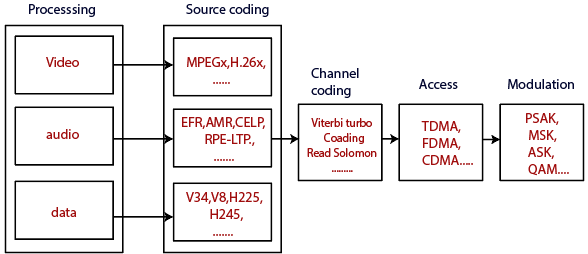
Fig: The block diagram of the third generation transmission system.
The cdma2000 radio transmission technology (RTT) is based on the evolution of current cdmaOne. The cdmaOne is the multimedia system that offers additional capacity and service enhancement.
Related Posts:
- Computer Networks MCQ (Multiple Choice Questions)
- Second Generation of Computer
- Fourth Generation of Computer
- Fifth Generation of Computer
- Low Level Language in Computer
- Middle-level language in Computer
- High-Level Language in Computer
- Input devices of Computer
- Output devices of Computer
- Computer: CPU (Central processing unit)
- Computer Fundamentals Tutorial