
×

What is UDIMM?

An unbuffered Dual Inline Memory Module is an Unbuffered DIMM, a volatile memory chip in laptops and computers. UDIMM is a standard type of RAM. It is also part of DDR (Double Data Rate) memory.

The application of UDIMM is that the address and control signals are mapped through the Dynamic RAM chip on the DIMM server, which eliminates the use of buffer and timing adjustment.

If we are transferring the data from the CPU to DRAM memory in the server memory, the UDIMM should check the distance of transmission from the CPU and DRAM is the same.
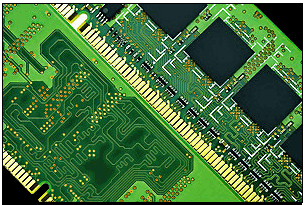
What is UDIMM

The UDIMM is faster when compared to RDIMM (Registered Dual Inline Memory Module) within devices with one or two modules for a memory channel. But when the device consists of more than two modules per memory channel, RDIMM is the best choice as it reduces the latency by increasing efficiency.

As we gained basic knowledge on UDIMM, let us discuss in detail how UDIMM came into use.

The RAM of a computer is equally important as that of the system processors in transferring the data and determining the system performance. So, the RAM has been improvised in the past decades to achieve faster data processing, where the memory chip size is small, but the data it contains is huge. The present computers contain the DIMM (Dual In-Line Memory Module) to achieve these.

In the DIMM, again, there are many types like RDIMM, UDIMM, etc.

Emerging of DIMM and UDIMM

In the past, the memory module that was in existence was SIMM. Single In-Line Memory Module, also a memory module mostly used around the 1980s, lost its importance when introduced 64-bit processors.

When Intel's Pentium CPUs were introduced, Synchronous Dynamic RAM(SDRAM) gained popularity these required two SIMMS in-line for the data transfer. Then slowly, DIMM, a double-sided SIMM, was used, increasing the data rate and still controlling the market with its features.

In this DIMM, the standard types are UDIMM and RDIMM.

UMM

Here we transfer all the commands from the memory controller to the Dynamic RAMs. UDIMM will not contain any buffer or register inside the DIMM. So, UDIMM does not require any extra buffer, control signals, and address. Therefore, the devices containing the UDIMMs can control only a finite number of DIMMs. UDIMM cannot increase the server performance as it only works in unbuffered mode and does not use complete allocated RAM.

One more limitation of UDIMM is that they do not have parity error detectors. When any error occurs, the memory controller finds the errors related to address and control signals.

Bandwidth and Latency of UDIMM

With the one DIMM per memory channel, the UDIMMs benefit from lower latency and higher bandwidth. When the device has two DIMMs for every memory channel, the clock cycle associated with the UDIMMs alters. The alter results in giving the address and control lines a high load. Due to this, each clock cycle should work double, resulting in lesser bandwidth and high latency, consequently reducing efficiency.

When the UDIMM is unsuitable for providing the required efficiency and results, they can use the RDIMM instead of the UDIMM.

Uses of UDIMM

UDIMMs are used within devices that require low memory. For example, students use computers and laptops only for study purposes.

The memory of UDIMM is on a scale of 2GB to 8GB. The UDIMM is cost-efficient, has low capacity, and has average performance suitable for every personal computer and laptop.


Related Topics

What is a Punch Card?

Paper cards with holes punched into them to represent computer data and instructions are known as punch cards (or "punched cards"), Hollerith cards, or IBM cards. They were a common...

6 minutes read.

What is flash memory?

Flash memory, commonly known as flash storage, is a non-volatile memory. In electronics products and enterprise software, flash memory is frequently used for storage and transfer. In-memory processing devices use...

6 minutes read.

RAM (Random Access Memory) Vs. ROM (Read Only Memory)

RAM (Random Access Memory) Vs. ROM (Read Only Memory) There are several differences between the Random access memory and read-only memory which is given below: RAM (Random Access Memory )ROM (Read Only...

4 minutes read.

Why am I unable to increase the resolution in Windows?

If you cannot raise the display resolution in Windows, take these actions. Identifying and resolving video driver issues If Windows doesn't let you raise the screen resolution, your video drivers can be...

3 minutes read.

What is a CSV file?

A plain text file known as a "Comma Separated Values" (CSV) file holds data by separating data items with commas. When data has to be interoperable with a wide range...

5 minutes read.

What Are Bottom Row Keys?

The bottom row keys, also known as the "home row" keys, are important for several reasons: The bottom row keys are where the fingers rest when not typing and are the...

7 minutes read.

Edge Computing

What is Edge Computing? Topics Covered What is Edge Computing?Need of Edge computingBenefits of Edge ComputingPotential industries using Edge ComputingChallenges of Edge Computing We all know about data existing in the cloud, but...

10 minutes read.

What is Auto Rotate?

On smartphones and tablets, the auto-rotate feature aligns the screen's alignment with the real orientation of the device. The display is switched to either portrait or landscape mode depending on...

3 minutes read.

What is Cable Modem?

A common piece of gear that links computers to your ISP is the cable modem. A cable modem, unlike other types of modems, uses coax cable to proxy that connection...

7 minutes read.

What is Motherboard?

The motherboard, also known as the mainboard or the baseboard, which is responsible for performing all the basic tasks on the computer. In mac, the motherboard is known as the...

12 minutes read.

Autoexec.bat and config.sys Information

Basically, the Config.sys and Autoexec.bat files are made for MS-DOS and Windows 3. x to load the device and operating system to work effectively. The most recent versions of MS-DOS...

7 minutes read.

Difference between Desktop and Laptop

What is Desktop? A Desktop Computer is designed for steady use at a particular location near a desk due to its huge size and power requirement. It uses devices for...

7 minutes read.

What is a Processing Device?

The computer receives input from input devices such as the keyboard, joystick, and scanner; then it goes through an intermediate stage; here, it manipulates the data and sends it to...

4 minutes read.

What is Composite?

Composite can have different meanings depending on the context, but generally, it refers to something made up of multiple parts or elements combined to form a whole. In materials science,...

10 minutes read.

High-Level Language in Computer

High-Level Language The high-level language is the programming language such as BASIC,C,C++,COBOL,FORTRAN,Java, Perl,PHP,Python,Ruby, Visual Basic, and Pascal, etc. These languages have strong abstraction, the style and the context which are more...

5 minutes read.

What does Alt + X do?

Alt + X is used for displaying the character’s Unicode character code and is a widely used keyboard shortcut. Usage of Alt  + X keyboard shortcut For using the Alt + X...

3 minutes read.

How can the Base be Shown?

In mathematics, a set of digits used to represent numbers is a base. As the base, different number systems employ various digit combinations. Examples include the binary number system, which...

3 minutes read.

What is Windows?

Microsoft created the desktop operating system called Windows. An operating system is a type of software that acts as an interface between the user and the hardware of a computer....

18 minutes read.

What is Microphone?

Microphone is an input device that converts audio or any sound vibration into electric signals, and saves the audio in digital or analog format. It was invented by E. Berliner...

10 minutes read.

Top 10 Internet tips and tricks

Internet, in a word, can be defined as global networking, which provides world-class facilities for communication and all other things. It is a vast network that connects things all over...

5 minutes read.